The Florence issue
Planning Florence Around the Tickets That Won't Move
Only three Florence sights run on a fixed clock. Here is how to book those, what the passes are actually worth, and how to spend the hours in between rather than a morning in a queue.

By Élodie FournierFlorence beyond the Uffizi queue
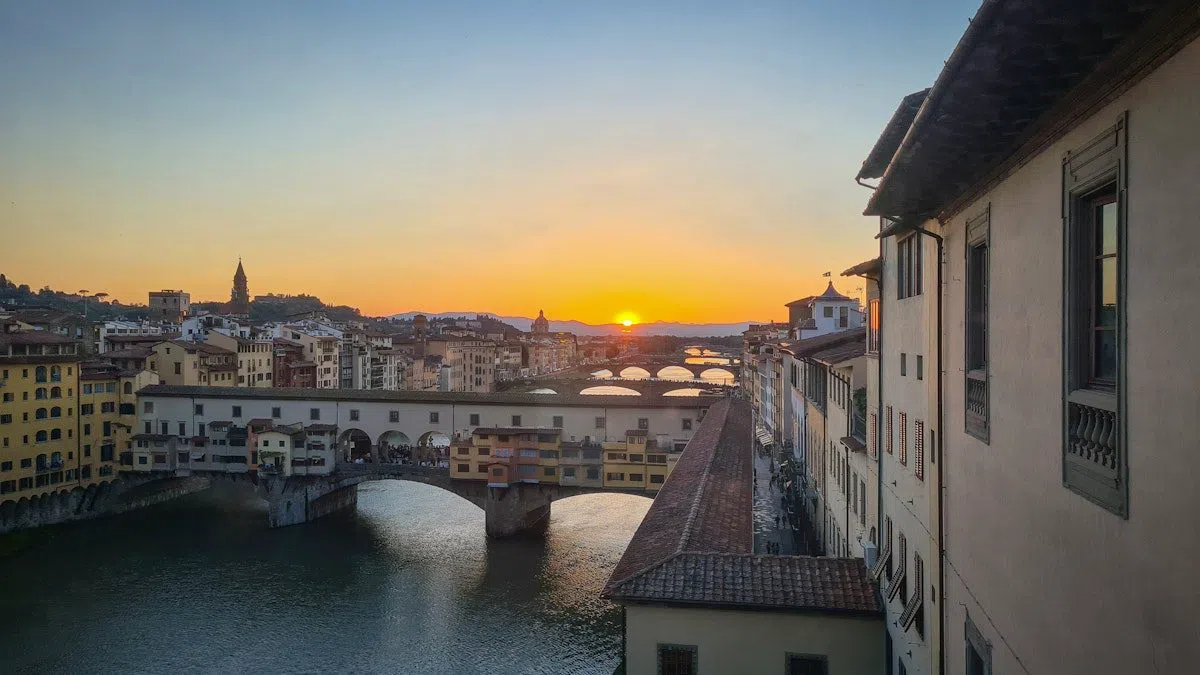
By nine on an April morning the line outside the Accademia has already bent around the corner of Via Ricasoli, and almost everyone standing in it is holding a ticket. Understand that about Florence before you reserve anything: the great sights are easy enough to get into, and hard to fit together. Three run on a fixed clock, a small handful need reserving weeks or months out, and most of the rest of the city, including some of its finest rooms, will take you whenever you turn up.
Only three sights genuinely run on the clock
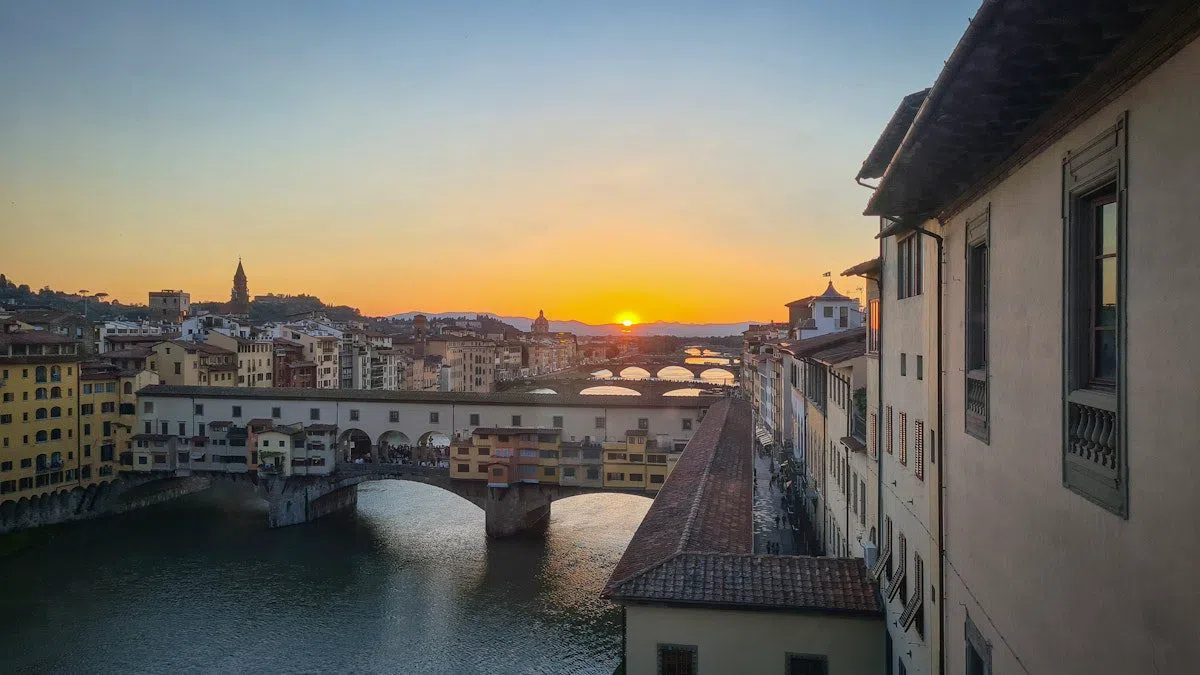
Galleria degli Uffizi (Piazza della Signoria, on the river side of the square) dictates the shape of a Florence trip rather than fitting into it. Entry is timed, the gallery closes on Mondays, and in high season the morning slots are gone weeks ahead, so this is the date you fix first and build everything else around. Pre-booked entry is €29 and same-day at the counter is €25, if anything is left. From 4pm it falls to €20 pre-booked, €16 on the door, and a late slot in June or July is a noticeably different museum from the ten o'clock crush: thinner in the Botticelli rooms, with the long west-facing windows going warm over the Arno in the last hour. EU passport holders aged 18 to 25 pay €2, under-18s are free, and so is the first Sunday of the month, though that day is counter-only, cannot be booked, and behaves the way an unbookable free day behaves.
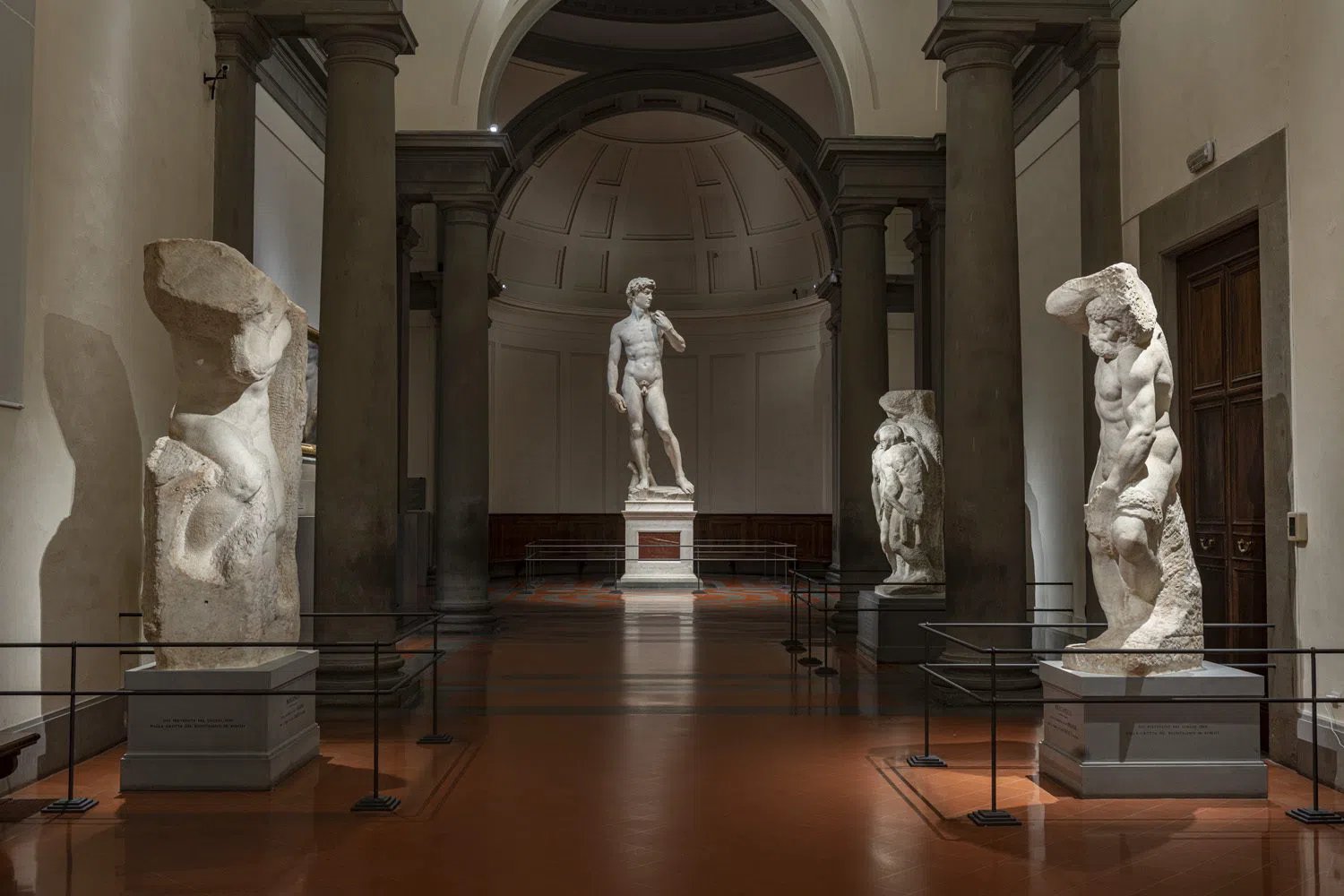
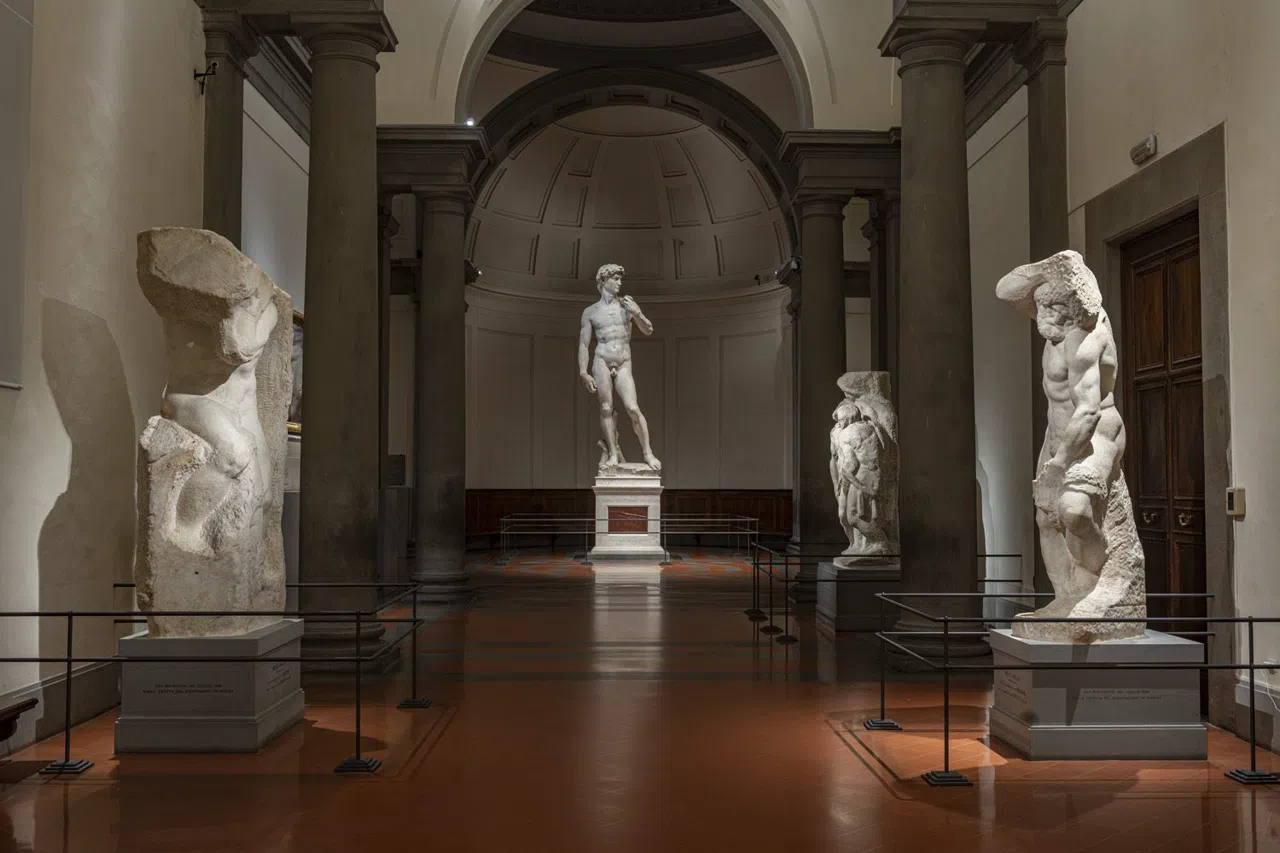
Galleria dell'Accademia (Via Ricasoli, in the San Marco quarter) is the opposite proposition. It is a small museum with one blockbuster room, so the queue is out of all proportion to the length of the visit; most people are done in an hour. Pre-booked entry is €20 including the €4 reservation fee, €16 at the door, €2 for EU 18 to 25, free under 18. The 8:15 slot sells out first and everything before 10am goes next; for July and August, four to six weeks ahead is realistic rather than cautious. When you arrive, note that the reserved-entrance queue is a separate line from the walk-ups, and standing in the wrong one is the most common way to lose twenty minutes you have already paid to avoid.
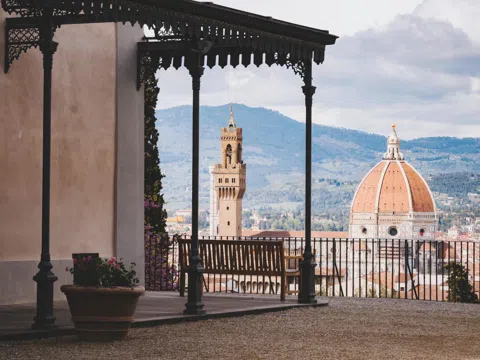
The third fixed point is the dome. The Cattedrale di Santa Maria del Fiore and the Opera del Duomo monuments (Piazza del Duomo) look like the most complicated booking in the city and are in fact the simplest, once you know the rule: only the climb up Brunelleschi's dome is tied to a date and a time. The cathedral itself is free. Everything else on whichever pass you hold (Giotto's bell tower, the Baptistery, the Opera Museum) is walk-in, and the passes run for three calendar days, so you can spread them across a trip in whatever order the weather and your legs suggest. The Ghiberti Pass is €15, the Giotto Pass €20, the Brunelleschi Pass €30. Bring photo ID for the dome gate, where it is checked. The staircase is single-file and strictly capped, which is why the slot exists at all.
Book those three and the hard part of planning Florence is over.
Plan your Florence trip
Live prices from our booking partners.
Free cancellation on many rooms. We may earn a commission when you book.
Reserve these months ahead or plan the trip without them
A few smaller things book out further ahead than the famous ones, and they catch people who assumed the Uffizi was the difficult one.
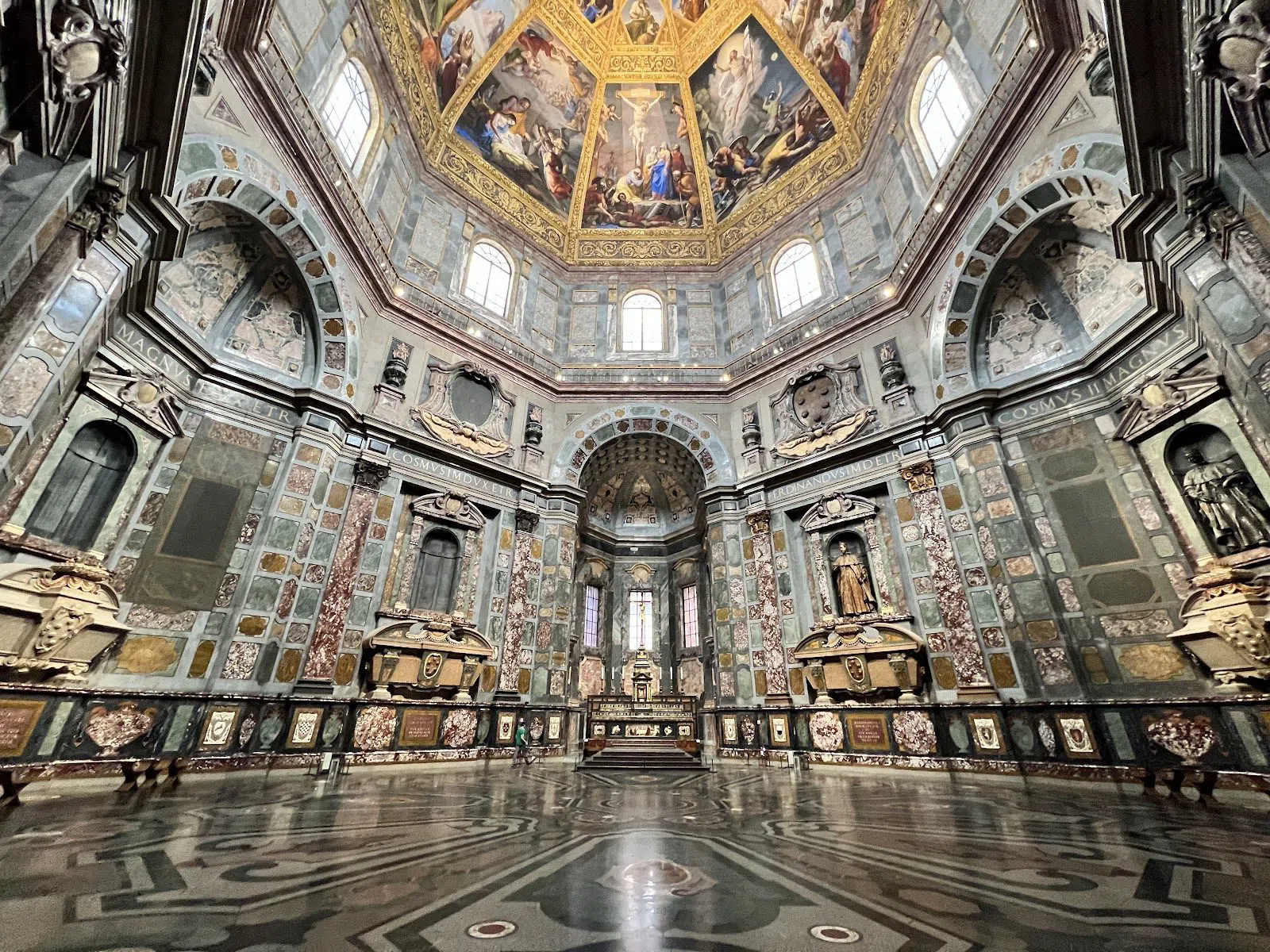
Cappelle Medicee (San Lorenzo, a few steps from the market) is Michelangelo without the Accademia crush: €11, plus €3 to €4 for a timed online slot, €2 for EU 18 to 25, free on the first Sunday of the month. The chapels themselves can usually be had at short notice. The Secret Room cannot. At €32, with four people admitted every fifteen minutes, it is effectively an individuals-only ticket and it books out months ahead. If you want it, reserve it before you book flights, not after.
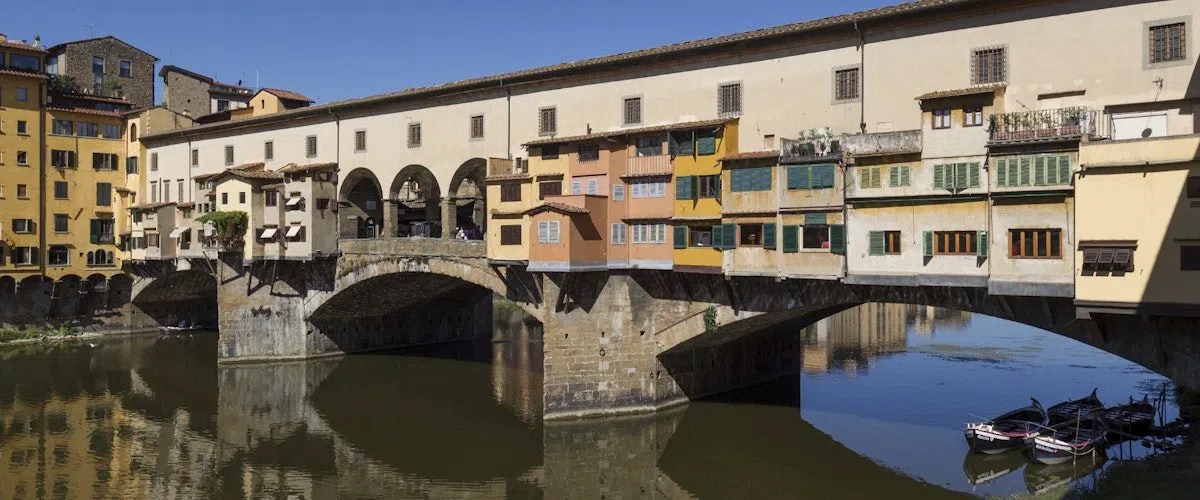
Corridoio Vasariano (running from the Uffizi across the Ponte Vecchio) has reopened and takes its own ticket; a standard Uffizi entry does not include it. Combined with the gallery it is €47 pre-booked, €43 same-day, and there is a Friday evening slot at €24 pre-booked, €20 on the day. Numbers are small, the entry time is fixed and the route runs one way, so there is no room for a large party and no doubling back. Uffizi admission falls two hours before the corridor slot, which catches people out: the pair takes a whole afternoon. Plan it as one.
Cappella Brancacci at Santa Maria del Carmine (Oltrarno, west of the Ponte Vecchio) is one of the few small sights where reservation is compulsory rather than merely advisable. The room is tiny, visits are capped at thirty minutes and it closes on Tuesdays; expect around €10 to €14 depending on the combined option, booked through the city museums portal. The restoration finished in June 2024 and the colour is transformed, worth the half-hour discipline.
What the passes are actually buying
Passes in Florence buy back flexibility more than they save money, and they are worth reading that way.
The Duomo passes buy three calendar days, which means the bell tower on a clear morning and the Baptistery on a wet one. The five-day PassePartout at €40 covers the Uffizi together with Palazzo Pitti and the Boboli Gardens (Oltrarno, across the Ponte Vecchio) and exists precisely so those do not have to be crammed into a single day; separately, Pitti is €19 pre-booked or €16 on the door, Boboli €13 and €10, the two together €25 and €22. The 48-hour Accademia and Museo Nazionale del Bargello combination at €26 plus the €4 booking fee is the sensible way to make the David morning worth a full morning. And from 15 March 2026 there is a 72-hour six-museum pass at €38 plus €4, which is where the Bargello and Orsanmichele start to look like value rather than extras.
The rooms that absorb a spare two hours
This is the part of Florence that rescues an over-timed itinerary, and it is much larger than most visitors realise.
Palazzo Vecchio and the Torre di Arnolfo (Piazza della Signoria) rarely sell out and offer the most substantial interior in the centre for the money: around €18 for the museum, roughly €12 reduced for 18 to 25s, the tower from about €8, with combined options through the city museums ticket office. Use it as the flexible block on a day when the Uffizi slot has fixed everything else. No under-sixes on the tower climb, and note it closes at 2pm on Thursdays.
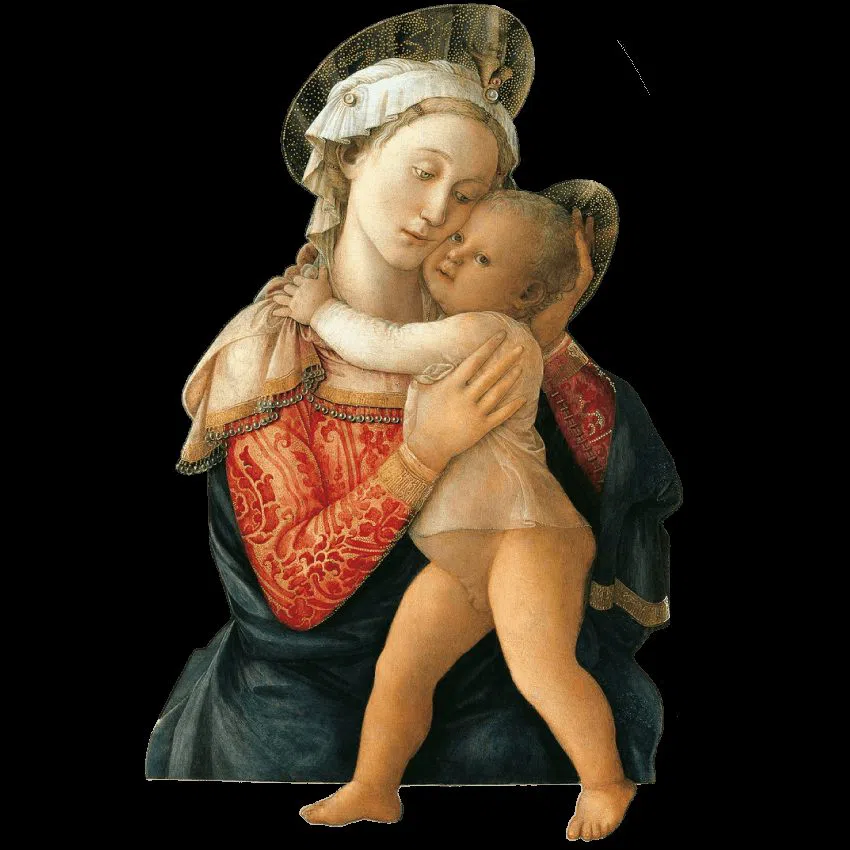
The Bargello (Via del Proconsolo, between the Duomo and the Signoria) holds Renaissance sculpture at Accademia level with a fraction of the queue, at €12, or €16 if you pre-book. Palazzo Medici Riccardi (San Lorenzo) has the opposite booking problem to the Uffizi: a slot can usually be had the same morning, for roughly €10 to €15 including the Magi Chapel, the Mirror Gallery and whatever exhibition is running, plus a €1.50 online fee. Chapel access runs in relays of ten people every five minutes for a five-minute visit, so you wait in the courtyard and then get five dense minutes in front of the Gozzoli procession. It sounds absurd and it is still worth doing.
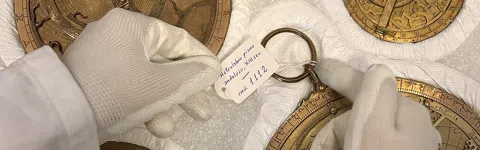
Museo Galileo (Piazza dei Giudici, sixty seconds from the Uffizi exit) is almost never busy and is the obvious place to put two hours when the next timed ticket is not for a while: €14 adult, €10 reduced, €7 for ages 6 to 18, under-sixes free, and free entry for group leaders and licensed guides. It closes at 1pm on Tuesdays. Chiesa e Museo di Orsanmichele (Via dei Calzaiuoli) sits on the direct walking line between the Duomo and the Uffizi and has reopened as a proper museum at €10 from 1 February 2026, included in the 72-hour pass from 15 March; the upper hall takes small groups only and goes to timed access on busy days. Sundays it closes at 12.20pm for services.
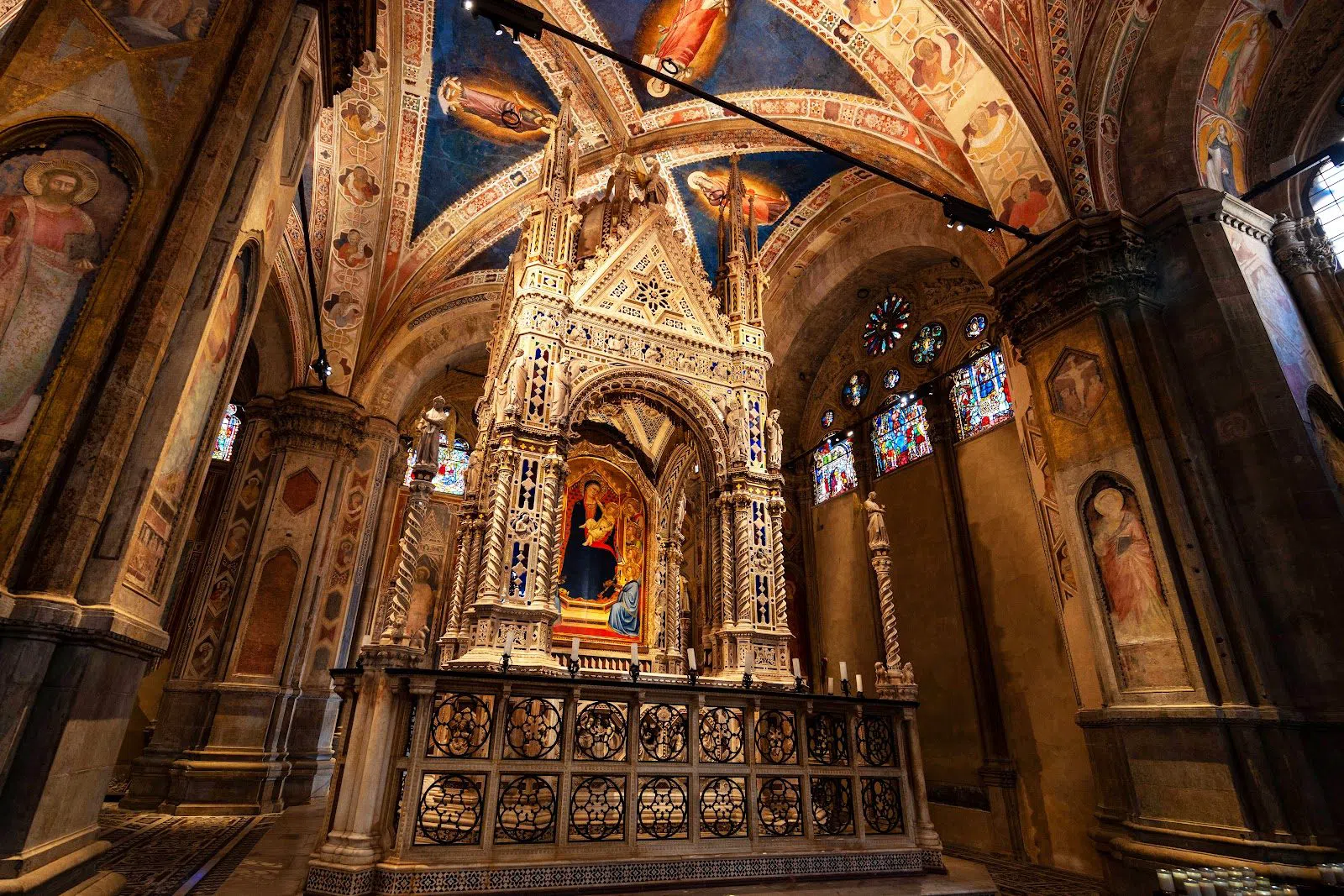
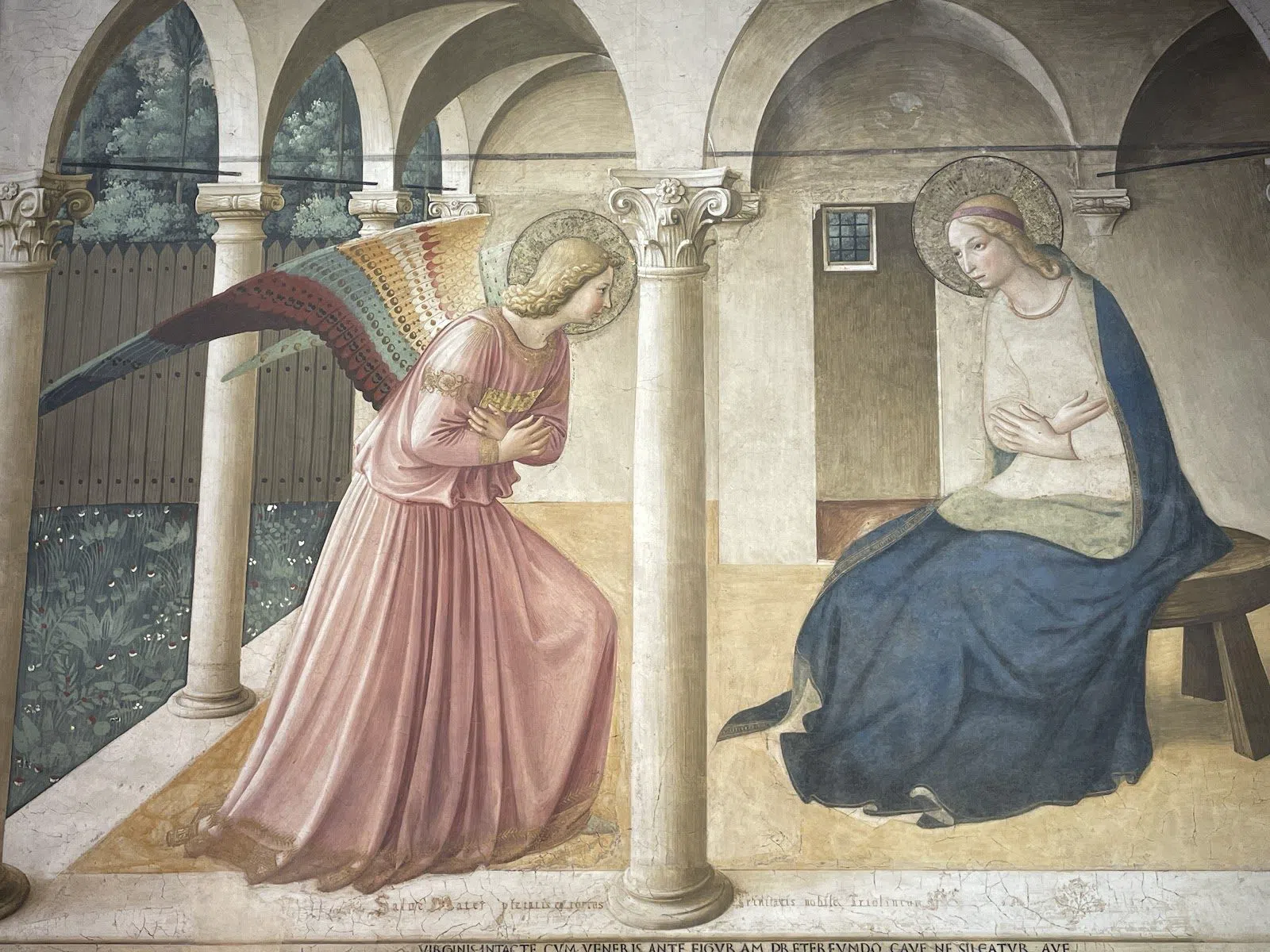
Museo di San Marco (Piazza San Marco) is the calmest of the great museums when the centre is at its worst (€11, €2 for EU 18 to 25, free under 18), but it closes at 1.50pm most days, so it only ever works as a morning stop. Book nothing; just go early.
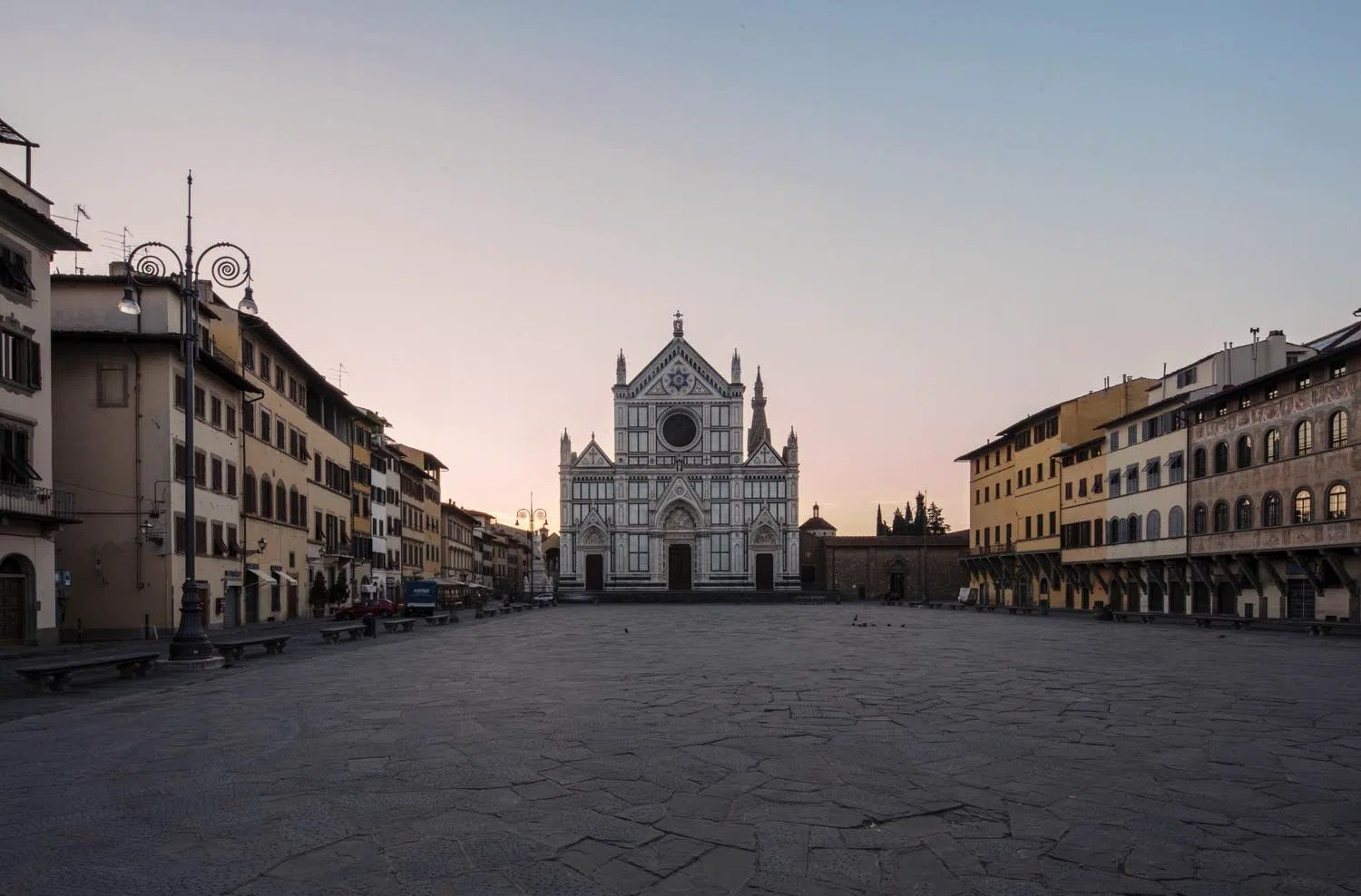
Two churches will take you at a day's notice or none. Basilica di Santa Croce (Piazza Santa Croce) is €10 at the ticket office, €11 with the online booking fee, €6 reduced, under-11s free, and covers the tombs of Michelangelo, Galileo and Machiavelli plus two cloisters; it opens at 2pm on Sundays. Complesso di Santa Maria Novella (two minutes from the station) is €7.50 full with a reduced rate for 11 to 18s, effectively never sold out, and makes a good first or last stop of a trip when the timed sights are already spoken for, with late opening at 11am on Fridays and 1pm on Sundays.
And then there is the one that costs nothing but the walk. Basilica di San Miniato al Monte (on the hill above Piazzale Michelangelo, south bank) needs no ticket, no slot and no reservation, for individuals and groups alike. Climb up in the last hour of daylight, stay for the Benedictine Gregorian chant at the evening service, and let the city go quiet below you. Quiet is expected during services; behave accordingly.
Closing days that break an itinerary
Write these into the plan before you book anything else. The Uffizi closes Mondays. Palazzo Vecchio closes at 2pm on Thursdays. San Marco closes at 1.50pm most days. Museo Galileo closes at 1pm on Tuesdays. Orsanmichele closes at 12.20pm on Sundays. The Brancacci chapel closes Tuesdays. Santa Croce does not open until 2pm on Sundays, and Santa Maria Novella opens at 11am on Fridays and 1pm on Sundays. A Sunday morning in Florence has fewer doors open than any other half-day of the week, which makes it the right slot for the Duomo passes, the walk up to San Miniato, or an Uffizi ticket booked long in advance.
Where the door rules bite for groups
Florence is not uniformly group-friendly, and the differences are worth knowing before anyone pays.
The Uffizi caps groups at sixteen, charges a €70 large-group surcharge from eleven people, and makes whisper-system headsets compulsory from five people including the guide; the same rules and surcharge apply on the Pitti side. The Accademia takes groups through the official b-ticket channel or by phone on +39 055 294883, and expects headsets. Palazzo Vecchio handles groups and school parties by arrangement with Musei Civici Fiorentini on +39 055 2768325, with limited tower access. Santa Croce is the most straightforward of the lot, with an explicit reduced rate from fifteen people and a booking office on +39 055 2466105, and Santa Maria Novella absorbs a party without noticing. Museo Galileo takes groups and school parties with advance booking.
At the other end: the dome staircase splits large parties across time slots because it is single-file; the Bargello and San Marco have compact rooms and narrow cell corridors, so guides keep parties tight and quiet; Palazzo Medici Riccardi puts everyone through the chapel in relays of ten; and the Vasari Corridor, the Secret Room and the Brancacci simply do not have the room. Couples and pairs get the best of Florence's small sights, groups the best of its big ones.
A three-day shape that holds up
Anchor day one on a pre-booked Uffizi slot, then walk sixty seconds to Museo Galileo when you come out, and finish at Palazzo Vecchio, which will still have space. Day two starts at 8:15 at the Accademia, continues to San Marco before its early close, and uses the afternoon for the Bargello on the combined ticket, with the Medici Chapels and Palazzo Medici Riccardi ten minutes away in San Lorenzo. Day three takes the dome slot in the morning, spends the rest of the Duomo pass on foot at whatever hour suits, crosses to Pitti and Boboli after lunch, and ends walking up to San Miniato for the evening service. That leaves Santa Croce, Santa Maria Novella and Orsanmichele as the gaps to fill on any afternoon that runs short. There is more detail on districts and eating in the Florence guide.
Practical notes
Everything named here sits inside a twenty-five-minute walk of everything else, which is why Florence rewards tight scheduling: you are never more than a bridge and a few streets from your next slot, so a two-hour gap is usable rather than dead. The one exception is San Miniato, twenty to twenty-five minutes uphill from the river, and worth allowing forty in July heat.
Cards work everywhere that sells a ticket, but carry a little cash for church offerings, candles and the market. Reservation fees are small and unavoidable (€4 at the Accademia, €4 at the Bargello, €3 to €4 for a Medici Chapels slot, €1 to €1.50 online at Santa Croce and Palazzo Medici Riccardi), and they are the price of not standing in a line.
On budget, a three-day run at the Uffizi, Accademia, a Duomo pass and two or three of the walk-in museums lands somewhere around €100 to €120 a head at full price, appreciably less if you are an EU passport holder aged 18 to 25 or travelling with under-18s, and less again if you use the 48-hour and 72-hour combinations rather than buying singly. Staying inside the historic centre is what makes the 8:15 slots painless; see the Florence hotel search for what is walkable from the Duomo. Book the Uffizi, the Accademia and the dome; leave the rest of the week loose. The city is better when you have somewhere to put a spare hour.
Before you go
How far ahead should I book the Uffizi and the Accademia for summer 2026?
For July and August, four to six weeks ahead is realistic for the Accademia: the 8:15 slot goes first, then everything before 10am. Uffizi morning slots also disappear weeks out in high season, so fix that date before you plan anything else. Pre-booked Uffizi entry is €29 and the Accademia €20 including the €4 reservation fee; the late Uffizi slot from 4pm is €20 pre-booked and much quieter.
Does the Brunelleschi Pass mean everything at the Duomo is timed?
No, which leaves an itinerary more room than people expect. Only the dome climb is fixed to a date and time, because the staircase is single file and strictly capped. The bell tower, Baptistery and Opera Museum are walk-in within the pass's three calendar days. The cathedral itself is free. Bring photo ID, since it is checked at the dome gate.
Is the Vasari Corridor included in an Uffizi ticket?
It is not. The corridor reopened with its own ticket: €47 pre-booked or €43 same day combined with the Uffizi, or €24 and €20 for the Friday evening slot. Entry time is fixed and the route runs one way, in small numbers. Plan a whole afternoon, since Uffizi admission falls two hours before the corridor slot.
Which Florence museums close early or on unexpected days?
The Uffizi closes Mondays and the Brancacci chapel Tuesdays. Palazzo Vecchio shuts at 2pm on Thursdays, Museo Galileo at 1pm on Tuesdays, San Marco at 1.50pm most days and Orsanmichele at 12.20pm on Sundays. Santa Croce opens only at 2pm on Sundays; Santa Maria Novella opens at 11am on Fridays and 1pm on Sundays.
What can I still see if I have booked nothing at all?
A great deal. Palazzo Vecchio rarely sells out, the Bargello is €12 on the door, Palazzo Medici Riccardi can usually be had the same morning, Museo Galileo is almost never busy, and Santa Maria Novella at €7.50 is effectively never full. Santa Croce takes a day's notice, and San Miniato al Monte is free with no ticket or slot at all.