The Florence issue
Florence in October Without Losing a Day to Queues
The centre fills up, but some hours, some days and some rooms still work. Prices, opening times and what you actually have to book for an October trip.

By Élodie FournierFlorence beyond the Uffizi queue
By half past eight on an October morning the sun has cleared the roofline on only one side of Piazza del Duomo, and the marble is still cold enough to feel through a coat sleeve. By eleven the same square moves at the pace of a slow river, phones up, guides' flags above the heads. What separates those two versions of Florence is about ninety minutes and one booked slot, repeated across a week.
October here is mild, often bright, and crowded in a way that is entirely predictable. Predictable is the useful part. The centre fills on a schedule, empties on a schedule, and half the city's best rooms are never full at all.
The hours that hold the crowd
The pressure in Florence is geographic before it is seasonal. Nearly all of it falls inside a triangle of roughly six streets (the Duomo, Piazza della Signoria, the riverfront by the Uffizi) and inside a window of roughly 10:00 to 16:00. Coach parties and day visitors arrive mid-morning and are gone by late afternoon. Outside that box, in both space and time, the city behaves like a normal working town of 360,000 people.
Most of the state museums open at 08:15 or 08:30. That first hour and three quarters is the single most valuable asset you have in October, and it costs nothing extra. The last two hours before closing are the second. Build the trip on those two windows and the middle of the day becomes lunch, a garden, a walk across the river, a shop that takes twenty minutes, instead of a queue.
The closures matter as much as the opening times. Mondays remove the Uffizi, the Accademia and La Specola. Tuesdays remove the Brancacci chapel. The Museo di San Marco is a morning-only proposition, and Palazzo Vecchio shuts at 14:00 on Thursdays while staying open until 19:00 on every other day it opens. A week planned around those four facts loses no time; a week that ignores them loses a full day.
The clocks go back on 25 October 2026. Before that, you can still be on a hilltop at seven in reasonable light. After it, usable daylight is gone by about half past five, and evening venues become the plan rather than an option.
Plan your Florence trip
Live prices from our booking partners.
Free cancellation on many rooms. We may earn a commission when you book.
Booking the two rooms everyone wants
Gallerie degli Uffizi (Piazzale degli Uffizi, off Piazza della Signoria) is the reason the riverside is impassable at noon. Tickets in the peak band run €29 in advance and €25 same-day, with a €2 reduced rate; the museum runs Tuesday to Sunday, 08:15 to 18:30. Advance costs more than the door, and what the premium buys is the hour. In October that trade is worth making. The 08:15 slot and the last two hours are the only genuinely calm windows. Anything booked between them puts you in the Botticelli rooms shoulder to shoulder.
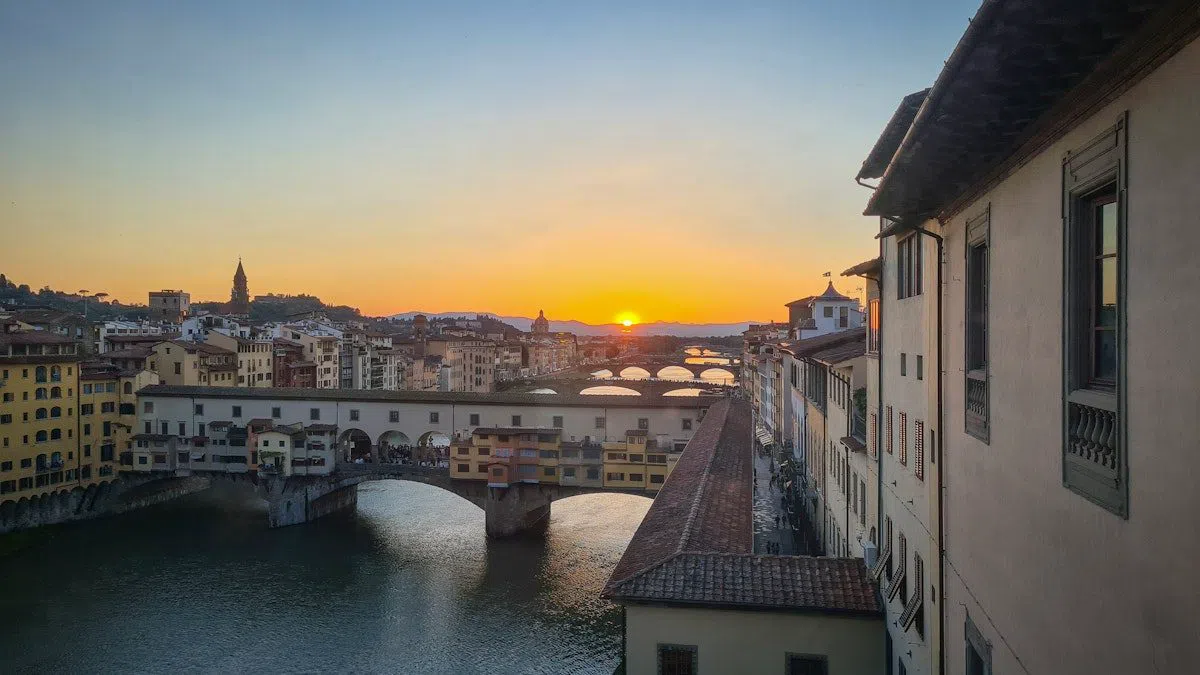
The reopened Vasari Corridor is a €20 supplement on the same ticket and runs Friday evenings from 19:00 to 23:00 through 20 November 2026, which in October means the 2nd, 9th, 16th, 23rd and 30th. It is the rare Florentine attraction that costs you no daylight at all.
Groups of eleven or more pay a €70 surcharge on top of tickets, must take headsets, and must hold a booked slot. That is not a formality; without the booking the group does not enter.
Galleria dell'Accademia di Firenze (San Marco) is €20 in advance with timed entry, €16 at the door, €2 reduced, Tuesday to Sunday 08:15 to 18:50. Treat it as a sprint rather than a morning. It is a one-hour museum built around one sculpture, and the walk-up queue in October is already long by 10:00. Book the earliest slot, give it an hour, and be back outside while the street is still cool.
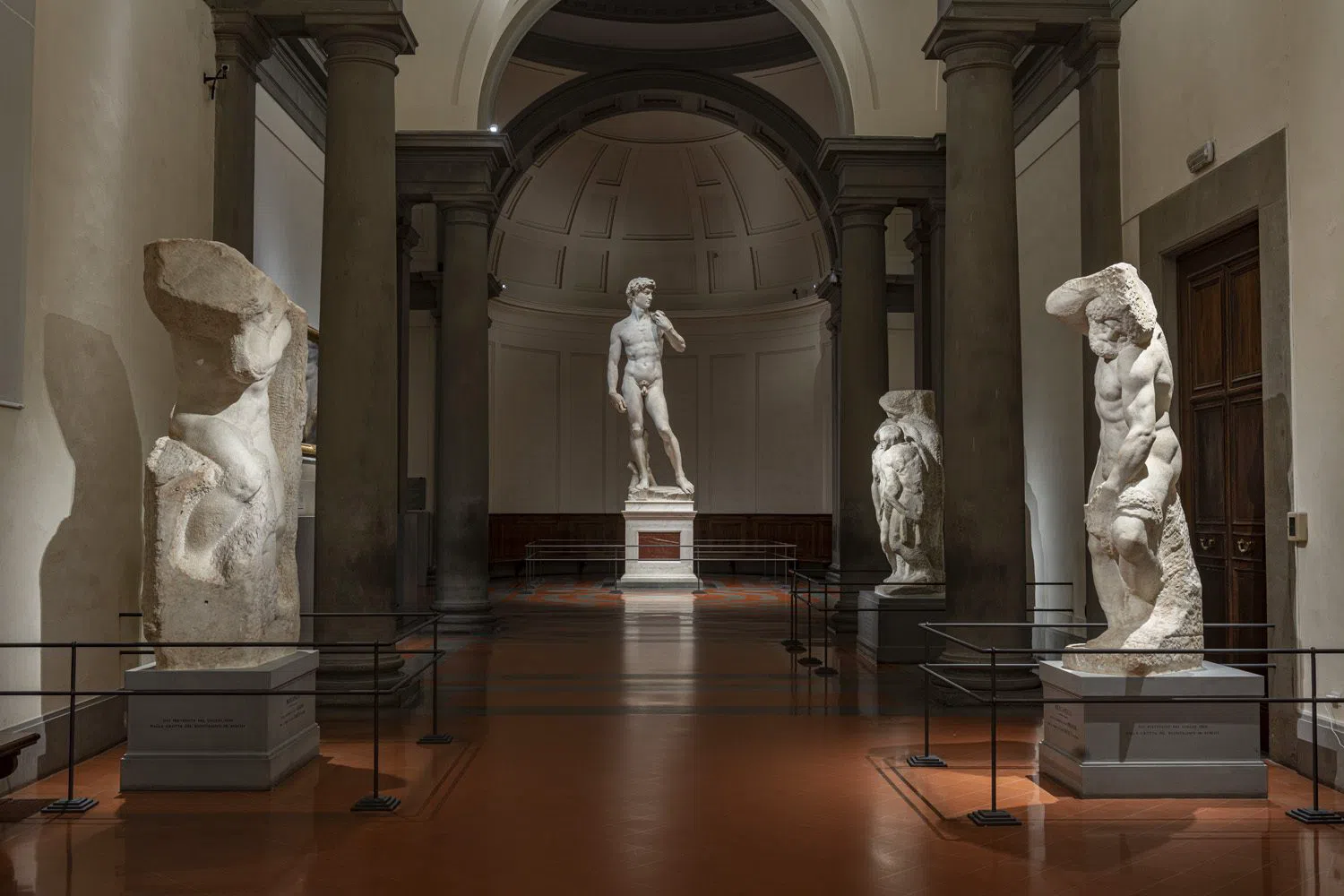
Groups over eight, and all school groups, must book by phone, not online, through Opera Laboratori on +39 055 294883. If you are travelling as a party of ten, that phone call is the whole difference between entering and standing on Via Ricasoli.
A combined Accademia and Bargello ticket at €26 is valid 48 hours, which pairs the busiest hour in the city with one of its quietest.
Three mornings of Duomo instead of one long day
The Cattedrale di Santa Maria del Fiore complex (Piazza del Duomo) is where most first visits go wrong, because it is sold as a single day and it is not one. The Brunelleschi Pass is €30 for ages 15 and over, €12 for ages 7 to 14, free under 6, with cheaper Giotto and Ghiberti passes if you want the campanile or the baptistery without the dome. The pass is valid three calendar days. Spread the dome climb, the baptistery and the museum across three mornings and each one is a forty-minute stop before breakfast rather than a five-hour endurance test in the middle of the afternoon.
The dome climb is timed-slot only and sells out days ahead in October. Book before you fly. Buy only at tickets.duomo.firenze.it. Resellers charge 40 to 80 per cent over face value for exactly the same slots, and there is no faster queue at the top of that money. Groups get split across slots because the staircase is narrow and one-way; a party of twelve should expect to climb in two halves and meet again in the piazza.
The rooms that absorb the overflow
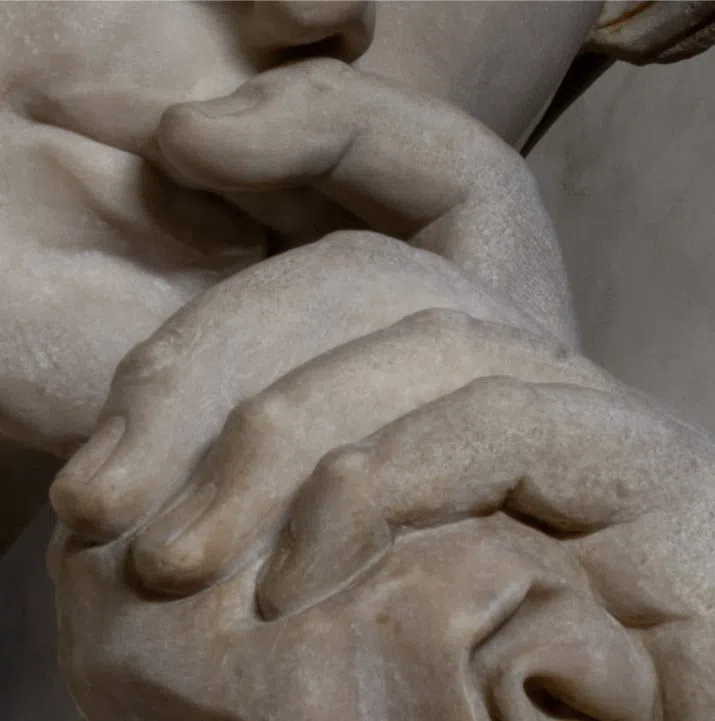
Museo Nazionale del Bargello (Via del Proconsolo, a three-minute walk between the Duomo and Piazza della Signoria) is about €12 and open 08:15 to 18:50. Donatello's David and Michelangelo's Bacchus live here, and it rarely queues, so groups can generally walk in. If you want one dependable crowd-free hour in the centre of Florence in October, this is it, and you can take it at eleven in the morning when everywhere else is at its worst.
Museo di San Marco (San Marco, beside the Accademia) is around €8, Tuesday to Sunday 08:30 to 13:50, with last admission at 12:45. It is a morning or it is nothing. The Fra Angelico and Fra Bartolomeo rooms were closed for refurbishment only between January and mid-March 2026 and have been open since. The cell corridor is narrow, so it works for couples and small parties and becomes a shuffling queue for anything over about eight people.
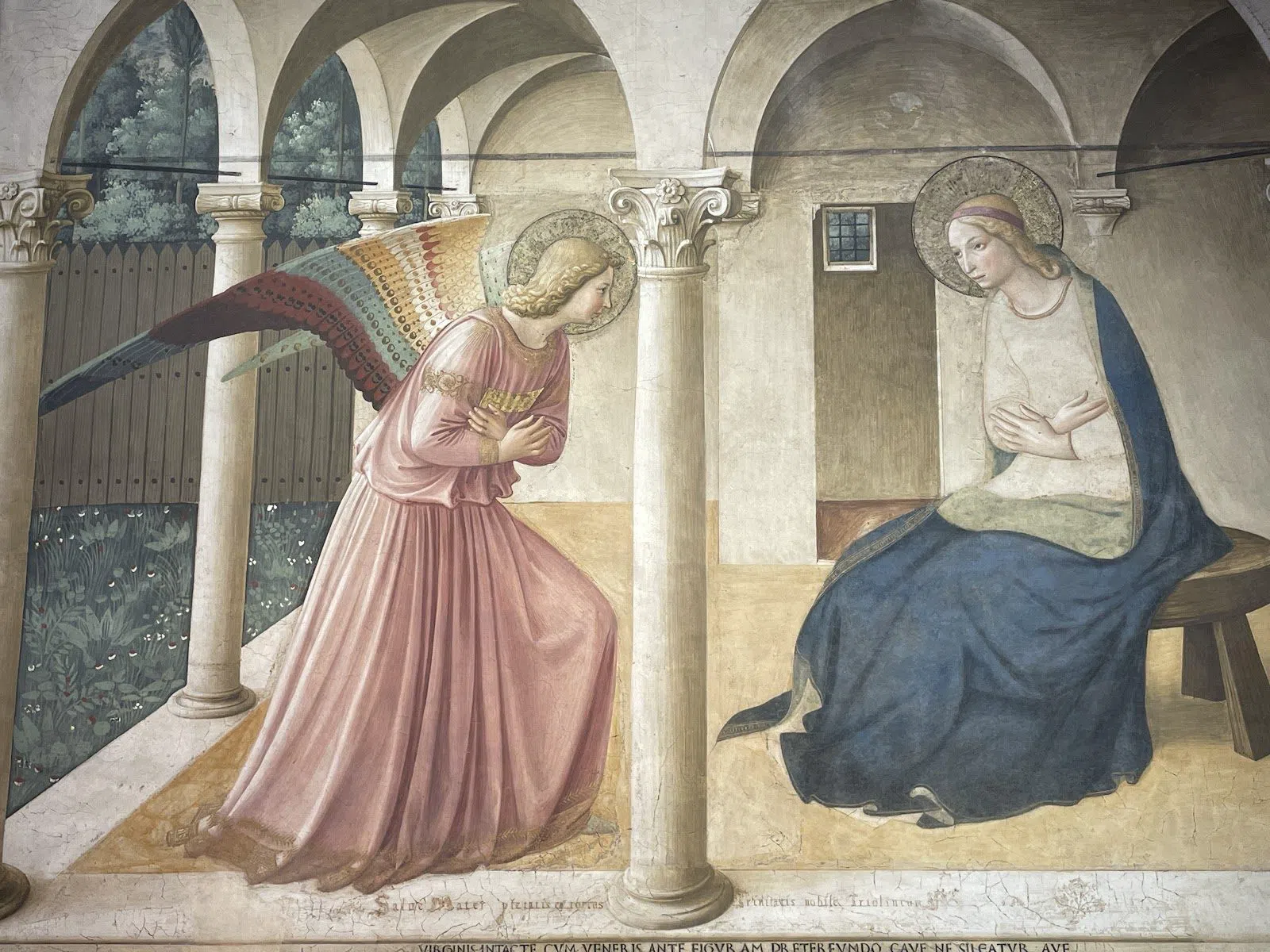
Cappelle Medicee (San Lorenzo, fifteen minutes on foot from the Duomo) runs roughly €9 to €12, 08:15 to 18:50, with irregular Monday and Sunday closures worth checking the week you travel. The New Sacristy is a small room and large groups need staggered entry. Think of it as the right thing to do between two booked slots rather than a destination you build a morning around.
Evening as a second day
Palazzo Vecchio (Piazza della Signoria) is the most underused fix for an October afternoon. The museum is €18, the Arnolfo Tower €13.50, the two combined €22, with a €12 reduced rate for ages 18 to 25. It opens Friday to Wednesday 09:00 to 19:00, Thursday only to 14:00. Those long evening hours are the point: the palace stays open after the Uffizi and the Accademia have shut, the courtyard empties out, and the Salone dei Cinquecento at six is a different building from the one at noon.

Fondazione Palazzo Strozzi (Via de' Tornabuoni) stays open to 20:00, later than any of the state museums, at around €15 depending on the exhibition. 'Broken: The Power of the Fragment' runs from 25 September 2026 to 24 January 2027, so an October evening there is a full cultural slot that spends no daylight. Groups have a dedicated booking line on +39 055 26 45 155 or [email protected].
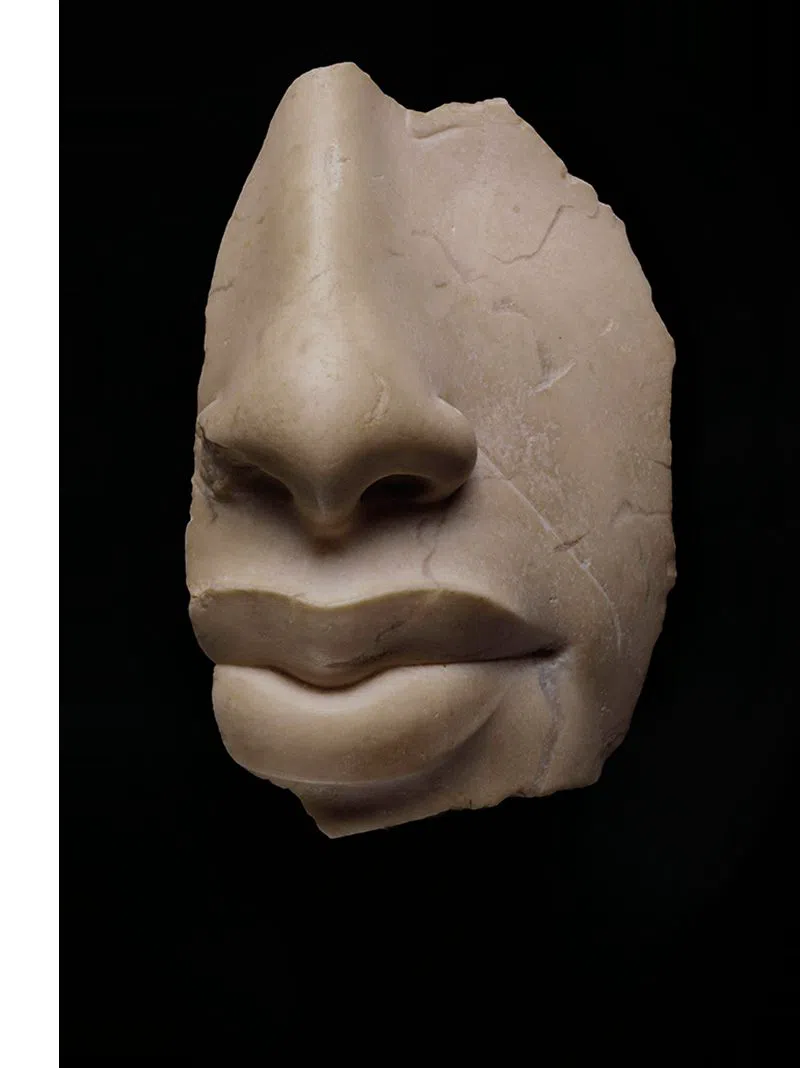
Mercato Centrale Firenze (San Lorenzo) solves the evening that restaurant bookings do not. The first-floor food hall runs 10:00 to midnight daily, nothing is reserved, everyone orders separately at different counters and meets at a communal table, and you will spend €10 to €20 a head. For a party of eight arriving without a plan at half past nine, it is the only reliable answer in the centre.
Across the river, where the afternoons are
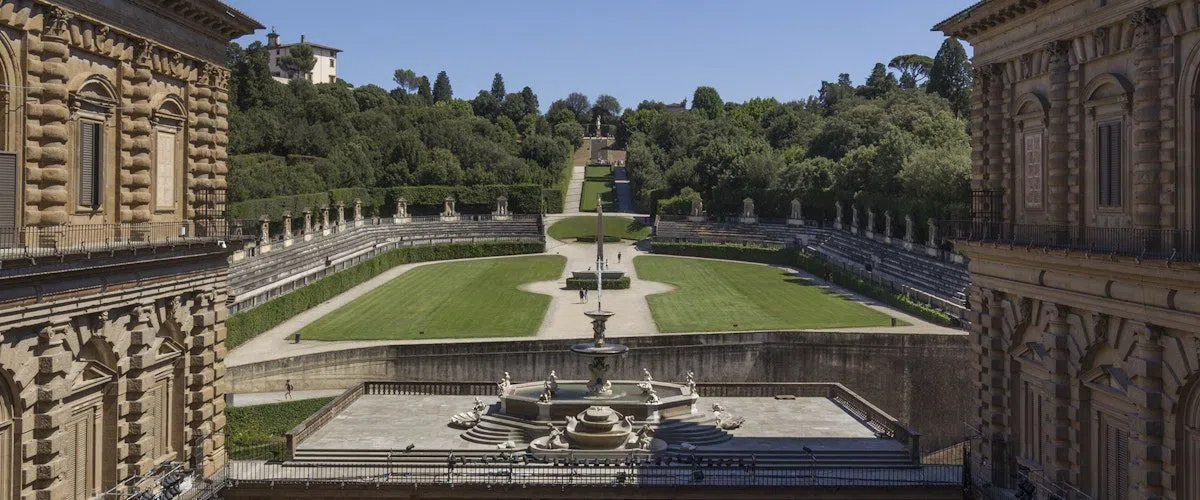
Giardino di Boboli (Oltrarno, behind Palazzo Pitti) is €10 full, €2 reduced, plus a €3 reservation fee, and free on the first Sunday of the month from October through March, meaning Sunday 4 October 2026. October hours are 08:15 to 17:30, extending to 18:30 once the clocks change, and it closes on the first and last Monday of the month, which in 2026 means the 5th and the 26th. Forty-five thousand square metres absorb any group size, and the same ticket admits you to the Giardino Bardini. This is the one place in the centre where an autumn afternoon can be genuinely unhurried.
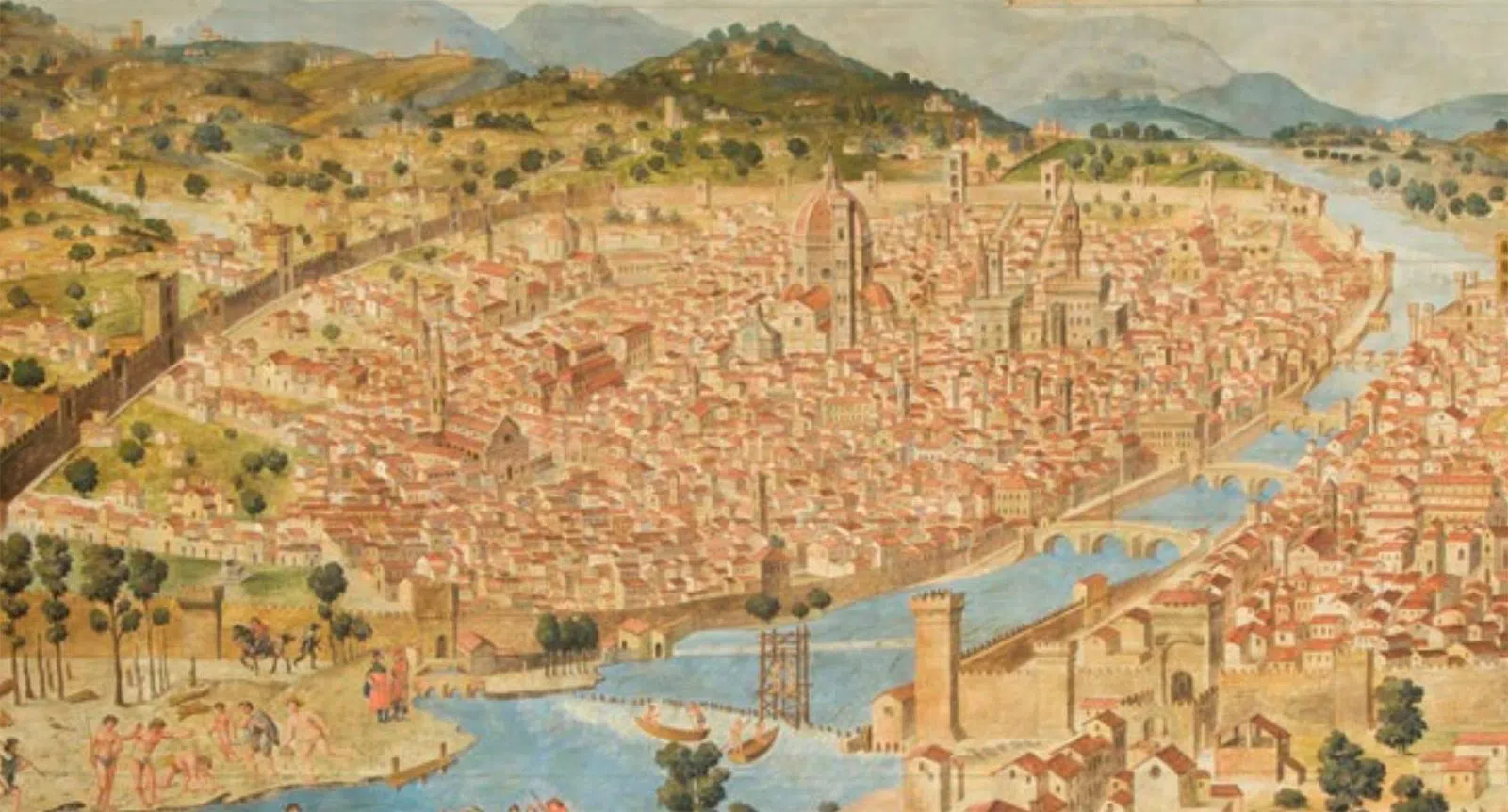
Cappella Brancacci (Santa Maria del Carmine, Oltrarno) is €15, open daily except Tuesdays from 10:00 to 17:00, Sundays from 13:00, after its long restoration. Booking is compulsory and slots cap at ten people per thirty minutes. That makes it a poor fit for any group. The cap is also why the Masaccio frescoes never feel crowded, and why October weekend slots go days ahead. Under-18s, licensed guides and Firenze Card holders enter free.
Museo di Storia Naturale — La Specola (Via Romana, Oltrarno) is €8 for adults, €5 reduced, €4 for children and students, Tuesday to Sunday 09:00 to 17:00. It reopened in February 2024 after a long redevelopment and is still largely off the Renaissance circuit, which makes it a dependable fallback for a wet October afternoon. Groups are not restricted here.
Two places with room to stand
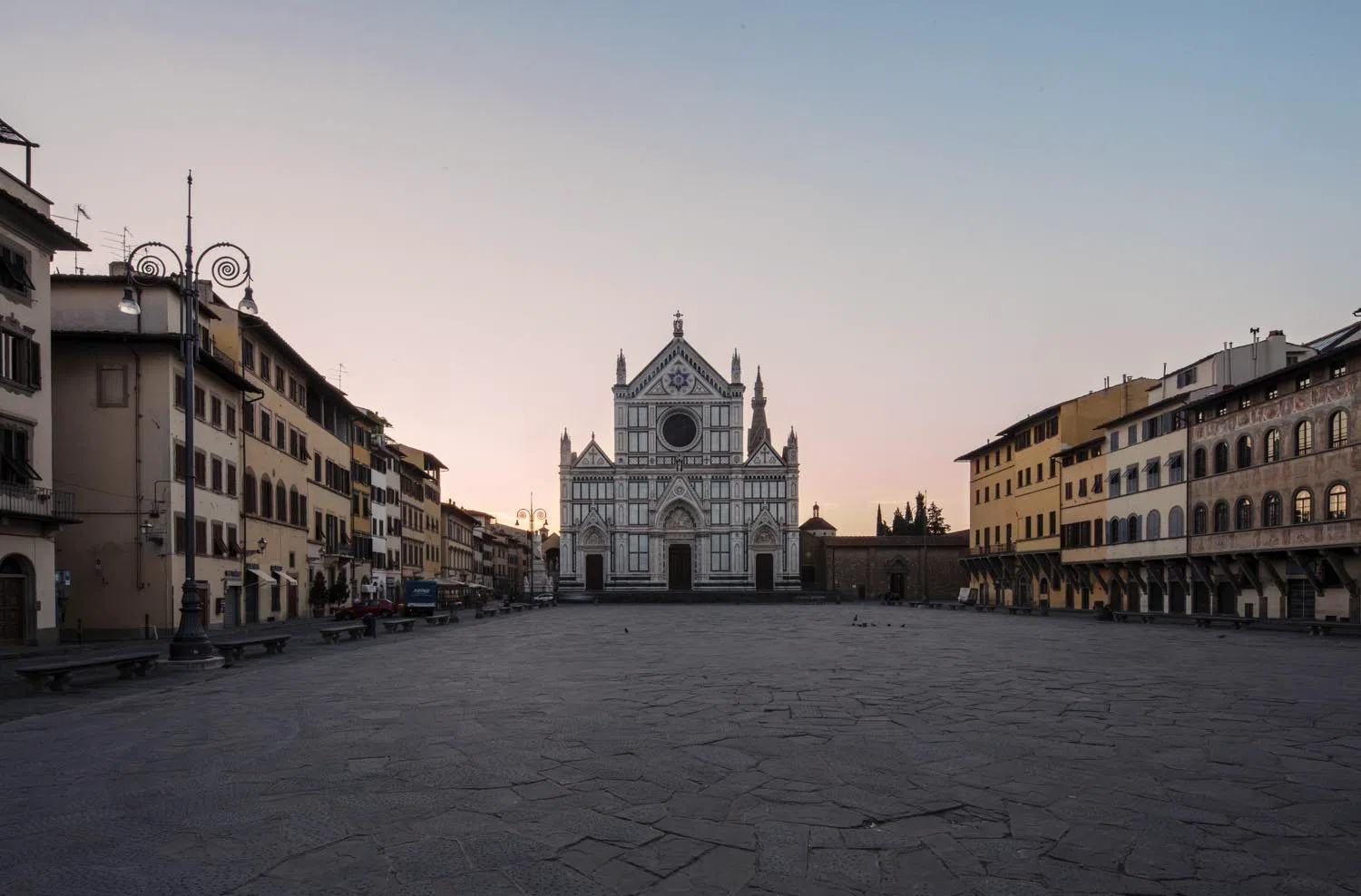
Basilica di Santa Croce (Piazza Santa Croce) is €10 full plus a €1 online booking fee, €6 reduced and for groups of 15 or more, one of the few places in Florence where arriving as a large party makes the ticket cheaper rather than harder. It opens Monday to Saturday 09:30 to 17:30 and Sunday 14:00 to 17:30 through 31 December 2026, and the ticket covers the church, cloisters, crypt and museum. Groups book on [email protected] or +39 055 2466105. The piazza outside is one of the last open spaces in the centre with room to simply stand in October.
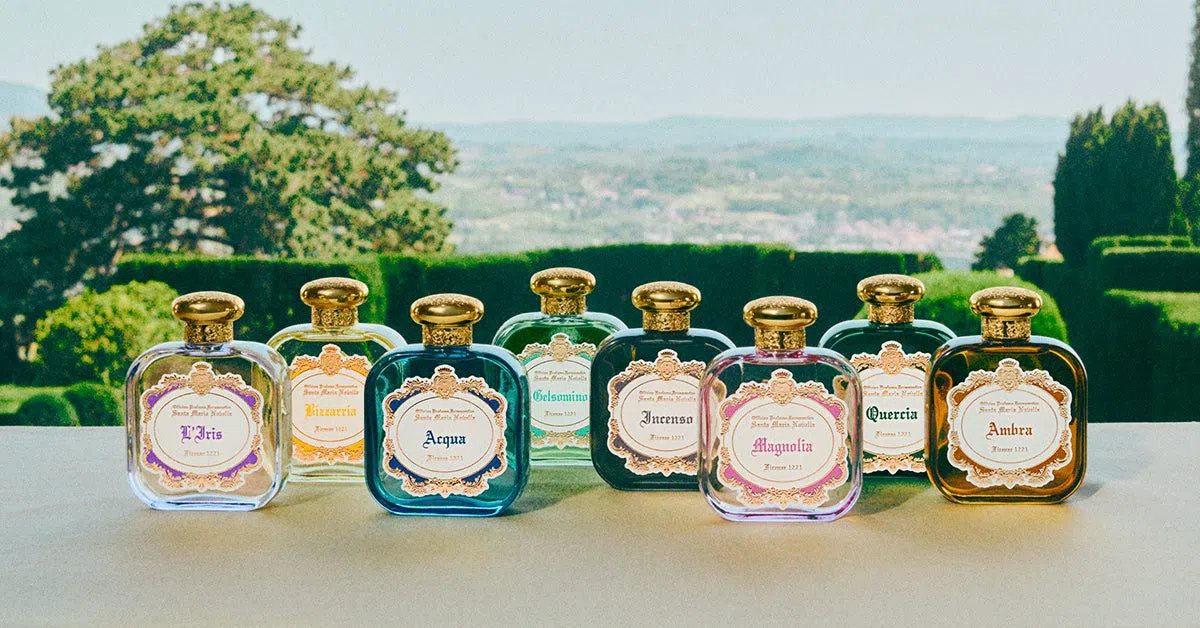
Officina Profumo-Farmaceutica di Santa Maria Novella (Via della Scala 16) costs nothing to enter, opens daily 09:00 to 20:00, and takes twenty minutes. It has traded as a Dominican apothecary since 1612, and its frescoed rooms are small, so go in twos and threes rather than as a party of twelve. Keep it in reserve for the gap when a booked slot is still two hours away and the sky has turned.
The hill at six o'clock
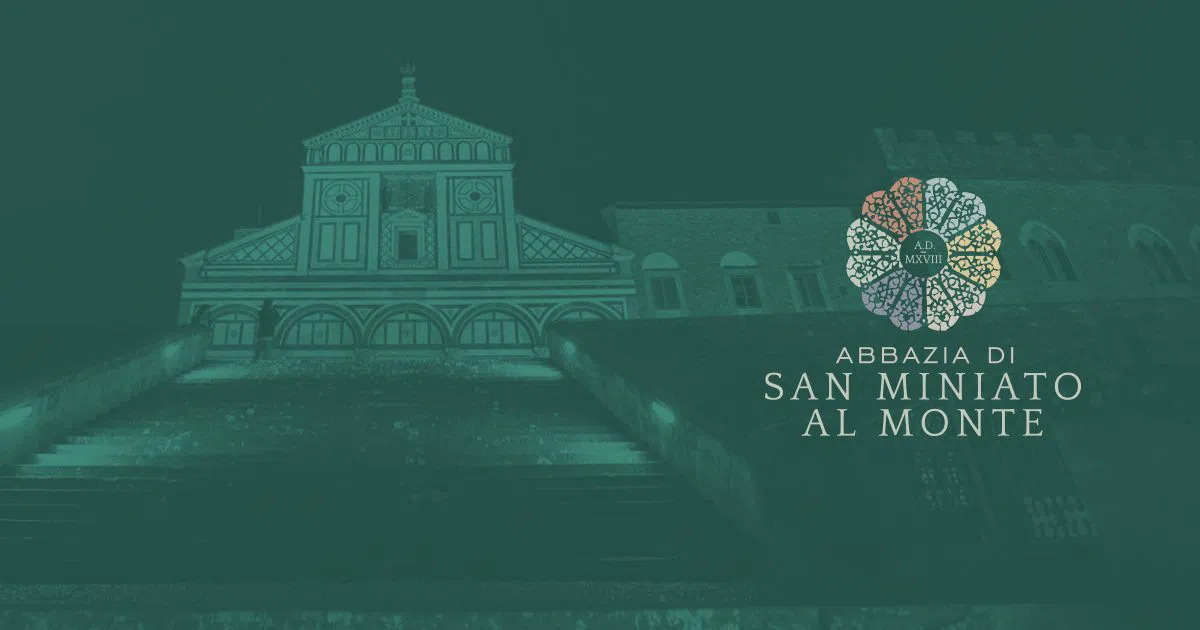
Basilica di San Miniato al Monte (on the hill above the Oltrarno, above Piazzale Michelangelo) is free, open Monday to Saturday 09:30 to 13:00 and 15:00 to 19:00, Sundays from 08:15. The Benedictine monks sing in Gregorian chant at the 18:00 Mass, with Vespers at 18:30. Walk up rather than taking a bus to the viewpoint below: you arrive above the coach crowd, into a building far older and quieter than the terrace beneath it, with the same view and none of the selfie sticks. Before 25 October you will come back down in light; after it, bring a phone torch for the steps.
Which places take a group and which will not
Boboli, Santa Croce, the Bargello, Mercato Centrale, Palazzo Strozzi and La Specola handle a party of a dozen without strain. The Uffizi and Palazzo Vecchio take groups on the right paperwork and a booked slot. The Accademia takes them only via that phone booking. The Brancacci chapel effectively does not, and the Officina and the San Marco cells are couples-and-threes places where a large group ruins the room for everyone in it, including itself.
Getting around, paying and what a day costs
The historic centre is walkable end to end in about thirty minutes, and almost everything above is inside it. The only real climbs are the dome, the Arnolfo Tower and the hill to San Miniato. The T2 tram runs from the airport into the centre in roughly twenty minutes; the train from the coast and from other Tuscan towns arrives at Santa Maria Novella, five minutes' walk from the Officina. Central Florence is a limited-traffic zone with camera enforcement, so if you have a car, park outside and leave it there.
Cards work almost everywhere, including museum ticket desks, but carry €30 to €50 in cash for market counters, small trattorie and the occasional church donation box. Budget roughly €50 to €70 a person a day for admissions if you are doing the Uffizi, the Accademia and the Brunelleschi Pass, and about half that on the days built around the Bargello, Boboli and San Miniato. Book the dome, the Uffizi and the Brancacci chapel before you arrive; everything else can be decided the morning of.
For where to sleep, staying in the Oltrarno or near Santa Croce puts you ten minutes from the pressure without living inside it. Start with a Florence hotel search and filter for walking distance rather than a view. More on the city's districts, food and seasons sits in our Florence guide.
Before you go
Is October really one of Florence's busiest months?
Yes, but the pressure is concentrated. Most of it falls between roughly 10:00 and 16:00 inside a small triangle of streets around the Duomo, Piazza della Signoria and the Uffizi. Museums opening at 08:15 or 08:30 give you nearly two calm hours, and the last two hours before closing are quiet again.
How far ahead do I need to book in October?
Book the Brunelleschi Pass dome slot and the Uffizi before you travel, since dome slots sell out days ahead in October. The Cappella Brancacci caps at ten people per 30-minute slot, and its weekend slots go days ahead as well. The Bargello, Boboli, Santa Croce and La Specola can usually be decided on the morning.
What should I do in Florence on a Monday?
The Uffizi, the Accademia and La Specola all close on Mondays. Palazzo Vecchio (09:00 to 19:00), Santa Croce (09:30 to 17:30), the Officina Profumo-Farmaceutica di Santa Maria Novella and Mercato Centrale are all open, and San Miniato al Monte runs its usual Monday hours. Boboli is open except on the first and last Monday of the month, which in 2026 means 5 and 26 October.
Where can I buy Duomo tickets safely?
Only at tickets.duomo.firenze.it. Resellers charge 40 to 80 per cent over face value for exactly the same timed slots, and the entry is no faster. The Brunelleschi Pass is EUR 30 for ages 15 and over, EUR 12 for ages 7 to 14, free under 6, and it is valid for three calendar days.
Which Florence museums work for a group of ten or more?
Boboli, Santa Croce (groups of 15+ get the EUR 6 rate), the Bargello, Mercato Centrale, Palazzo Strozzi and La Specola all take groups comfortably. The Uffizi adds a EUR 70 surcharge for 11 or more, plus headsets and a booked slot; the Accademia wants a phone booking for parties over eight; and the Cappella Brancacci, with ten places per slot, cannot take a group at all.