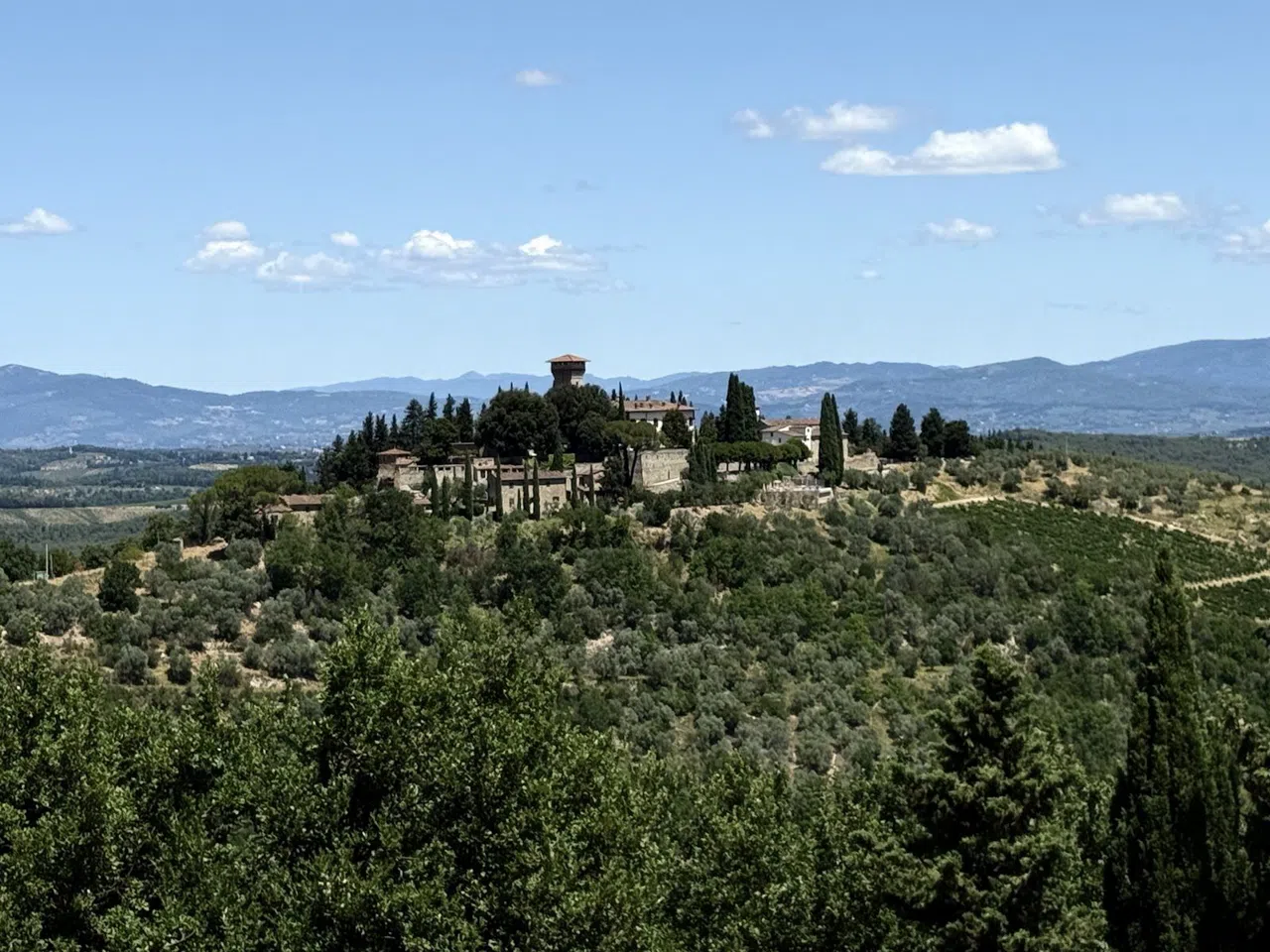

The road south out of Florence stays tarmac for about half an hour, then turns white: gravel, cypress, a farm gate every kilometre. That is where the wine safari earns its slightly ridiculous name. A small vehicle on the strade bianche, a driver who knows which track ends at a cellar door and which ends at a padlocked gate, and two or three estates strung together in a day no full-size coach could manage. You come back with Sangiovese on your teeth and, if the day was run properly, a clear idea of what Chianti Classico actually is.
What you are actually buying
The format is plain. Seven to nine hours door to door, two or three wineries, a sit-down lunch in the middle, and a high-clearance or open vehicle instead of a bus. The vehicle matters more than it sounds. The estates worth the drive sit at the top of unpaved climbs with tight hairpins, which is exactly why large groups get funnelled to the same three cellars on the main road all summer. The guided small-group version of this day runs seven days a week, from 153 USD per person, and the best-established one carries 4.9 out of 5 from 5,667 traveller reviews. It has been running long enough to be routine.
Inside each estate the rhythm repeats and gets better with familiarity. Someone walks you along the vineyard rows and explains why the same grape behaves differently at 300 metres and at 500. You go down into a barrel cellar that is ten degrees cooler than the car park. You taste an Annata, then a Riserva, then, if the estate makes one, a Gran Selezione, in that order, with bread, oil and pecorino to keep you upright. By the third stop you can taste the step between those tiers yourself without being told. Learning that is worth more than the bottles you carry out, and it is why the format beats a single long lunch at one address.
The castle estates and which one to pick
Four of the big names sit within twenty minutes of each other and they are not interchangeable.
Castello di Verrazzano (hilltop above Greve in Chianti) is the easiest first stop and the easiest sell to a mixed international party, because the family gave its name to Giovanni da Verrazzano and therefore to a bridge over New York Bay. It opens daily 10:00 to 18:00 and runs fixed departures shared with other guests, so a couple or a party of six slots straight into an existing tour. Book by email or phone, and check in a few minutes early, since arriving late costs you part of the programme rather than delaying it. The classic tour and tasting is about €30 per person, more for the wine-and-food and lunch formats. One warning: the historic cellar is reached by stairs and is hard going for anyone with mobility problems.
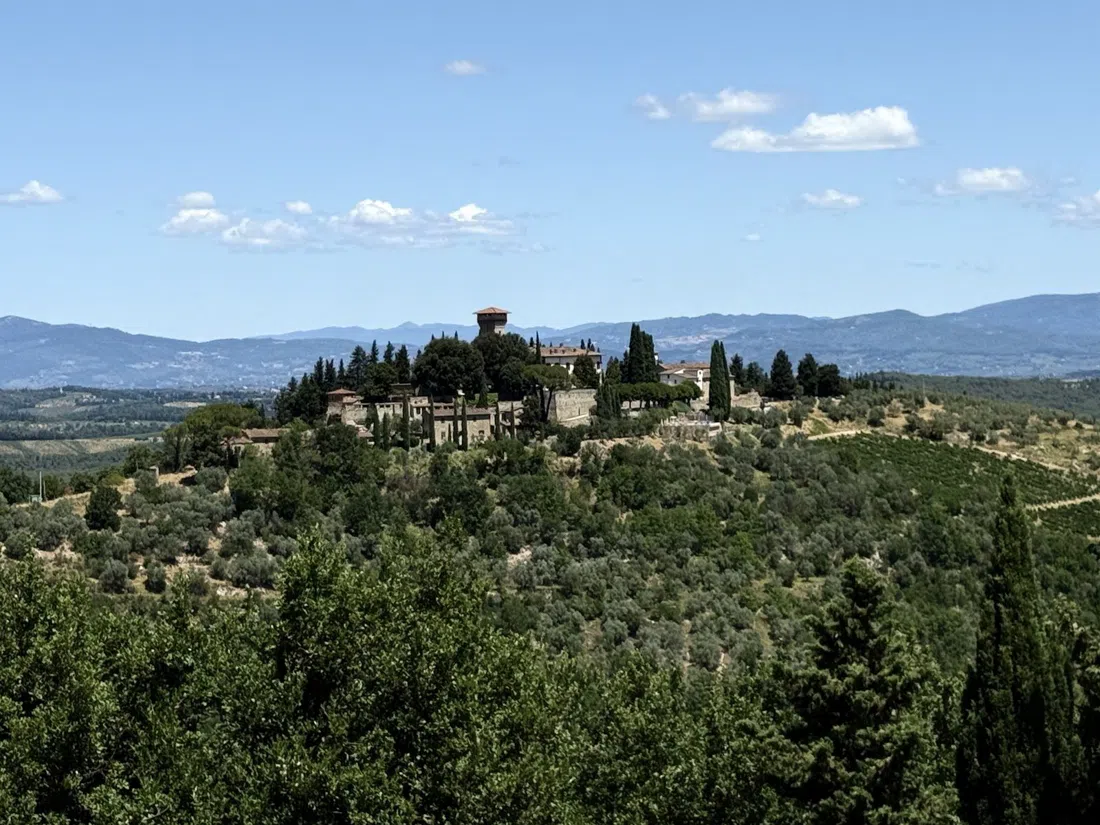
Castello Vicchiomaggio (Greve in Chianti) is a 140-hectare working estate with the best valley view in the Greve cluster, and visits are by reservation only, roughly an hour and a half, then a tasting or lunch at the castle. Monday to Friday 10:00 to 17:00, Saturday to 18:30, Sunday to 18:00. Tastings run about €25 to €60 per person depending on the tier, lunch on top. The reservation rule is the point: it keeps the place noticeably calmer than the cellars you can pull straight into off the road.
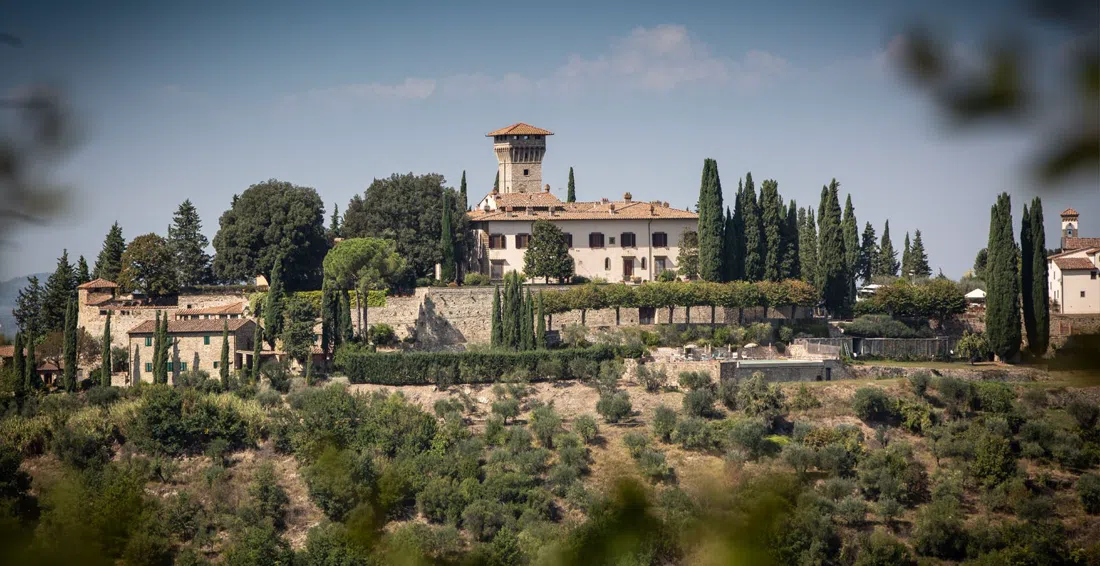
Vignamaggio (Greve in Chianti) has cellar records going back to 1404 and gardens that were used as the location for Much Ado About Nothing. Tours and tastings are bookable online, and parties over fifteen have to be arranged through [email protected] rather than the web form. Reckon on €30 to €90 per person across the Chianti Classico Experience, Colours and Ultimate tastings, more with lunch. The villa itself is under restoration, so tastings and meals happen at La Fattoria, not in the house. If the photograph of the villa is what sold you on it, adjust.
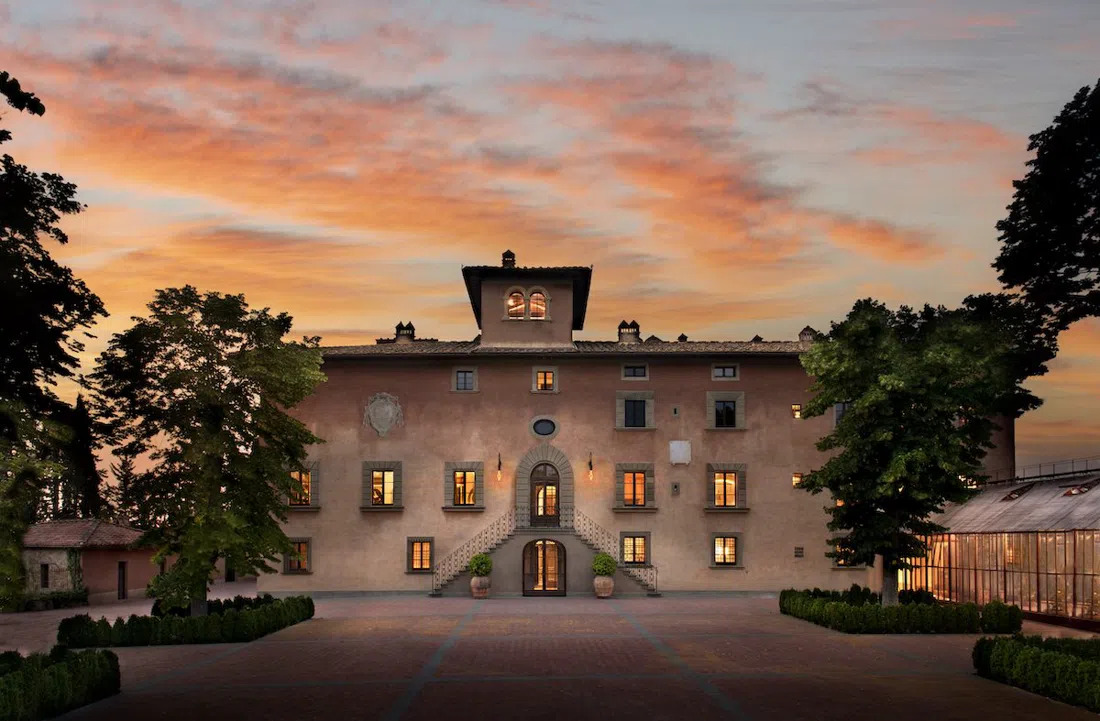
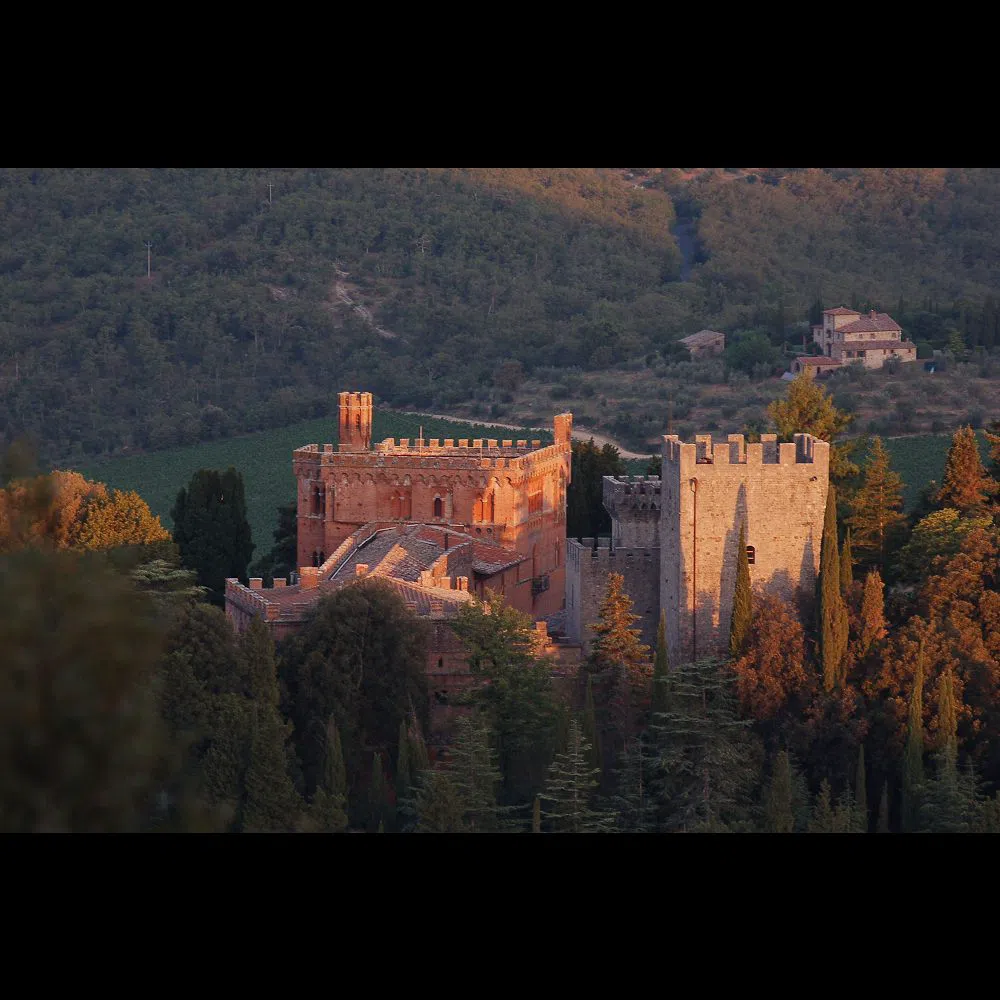
Castello di Brolio (southern Chianti Classico) is where the Chianti formula was written down in 1872 by Barone Ricasoli. It is also the most flexible stop on any itinerary, because the grounds open daily without a reservation: 20 March to 12 October 10:00 to 19:00, shorter hours after that, and Thursday to Sunday only from November. Twelve euros gets you the gardens and the Ricasoli Collection including one wine. The guided Classic Tour, usually at 10:30 and by reservation, is about €55 per person with three wines. If you have half a day and no plan, the garden ticket is the lowest-commitment thing in these hills.
Small parties and the seven-seat rule
Castello di Ama (Chianti Classico hills, north of Siena's side of the ridge) is the strongest fit in the region for two to six people and the least suitable for anything larger, because shared tours are capped at seven guests and booking is required. The estate combines wine with a serious contemporary art collection, and the art walk is included rather than sold separately. The Enoteca runs 10:00 to 19:00 and the Arca from 10:30 to 19:00, Monday to Saturday. It closes on Sundays, which catches people out. Journey to Ama is €90 per person, The Imprint of Terroir €129, and the private Ark of Vintages €279. It is expensive and it is worth it if you care about either half of the proposition.
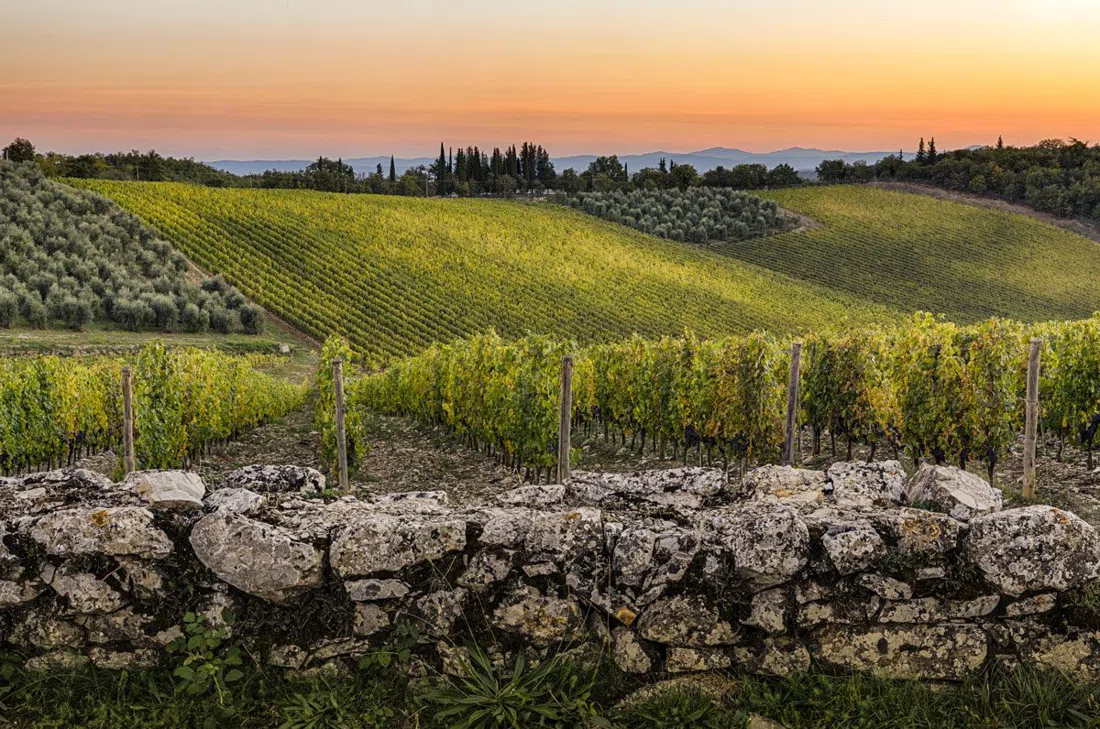
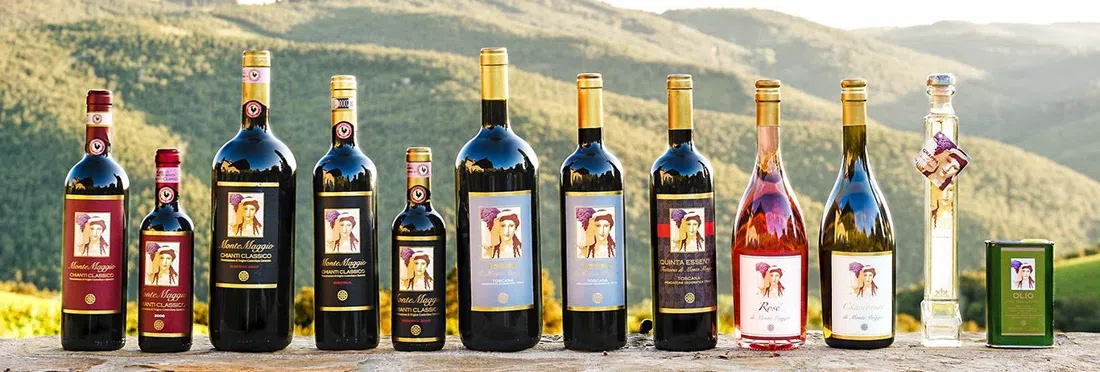
Fattoria di Montemaggio (Radda in Chianti side of the hills) is the opposite of the castles. Certified organic since 2009, about 20,000 bottles a year, and the person pouring is usually the person who made it. Booking is required and tastings run an hour and a half to two hours for small parties. The office answers Monday to Friday 09:00 to 16:00 and weekends 10:30 to 12:30, so plan your email accordingly. Around €30 per person buys five wines with cheeses, salumi and the estate olive oil. If you have already done one grand cellar, make the second stop here for contrast.
The winery that is really a piece of architecture
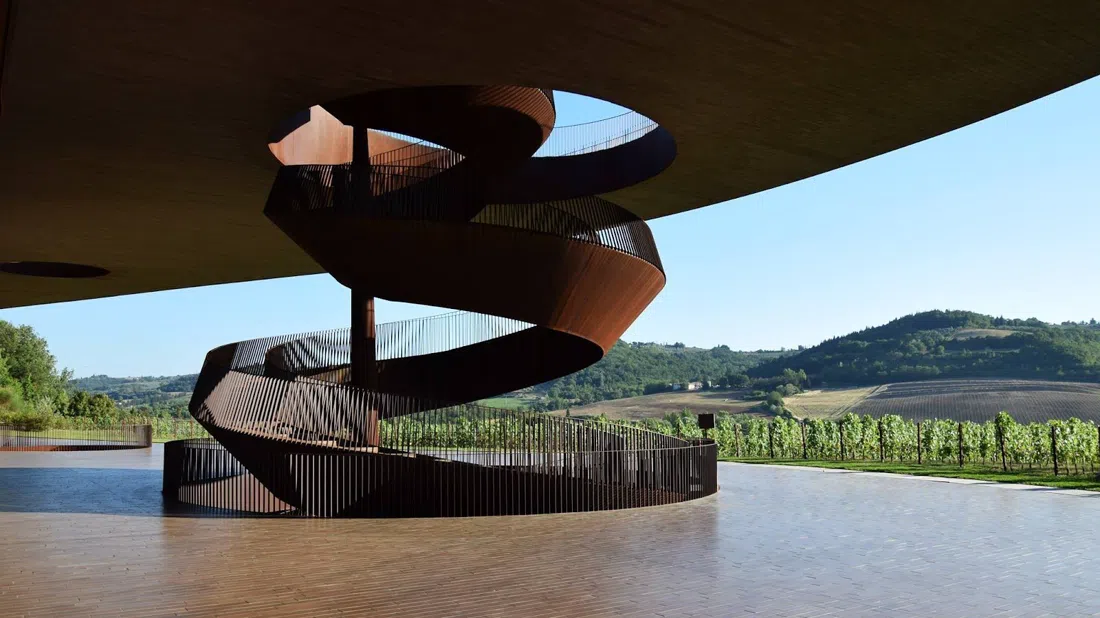
Antinori nel Chianti Classico (the hills directly south of Florence, first stop on the way out) is a building buried in a hillside with a spiral staircase through the middle of it, and the architecture is as much of the draw as the wine. Booking is required: the estate says plainly that entry is not guaranteed without one, and walk-ins get turned away in high season and during private events. Opening is April to October daily 10:00 to 18:30, November to March Monday to Friday 10:00 to 17:30 with weekends 10:00 to 18:00. The Tinaia Tour starts around €45 per person; Bottaia and CRU cost more, and lunch at Rinuccio 1180 is booked separately. If someone in your party would rather visit a museum than a farm, this is the stop that keeps them happy.
Lunch and the butcher everyone has heard of
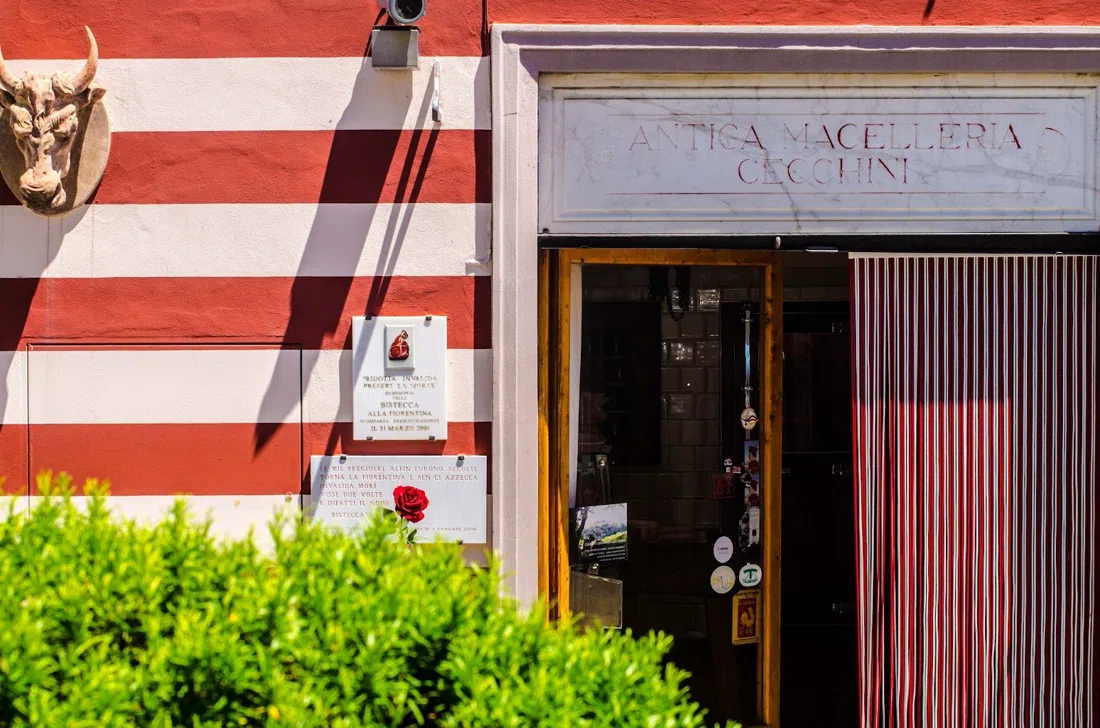
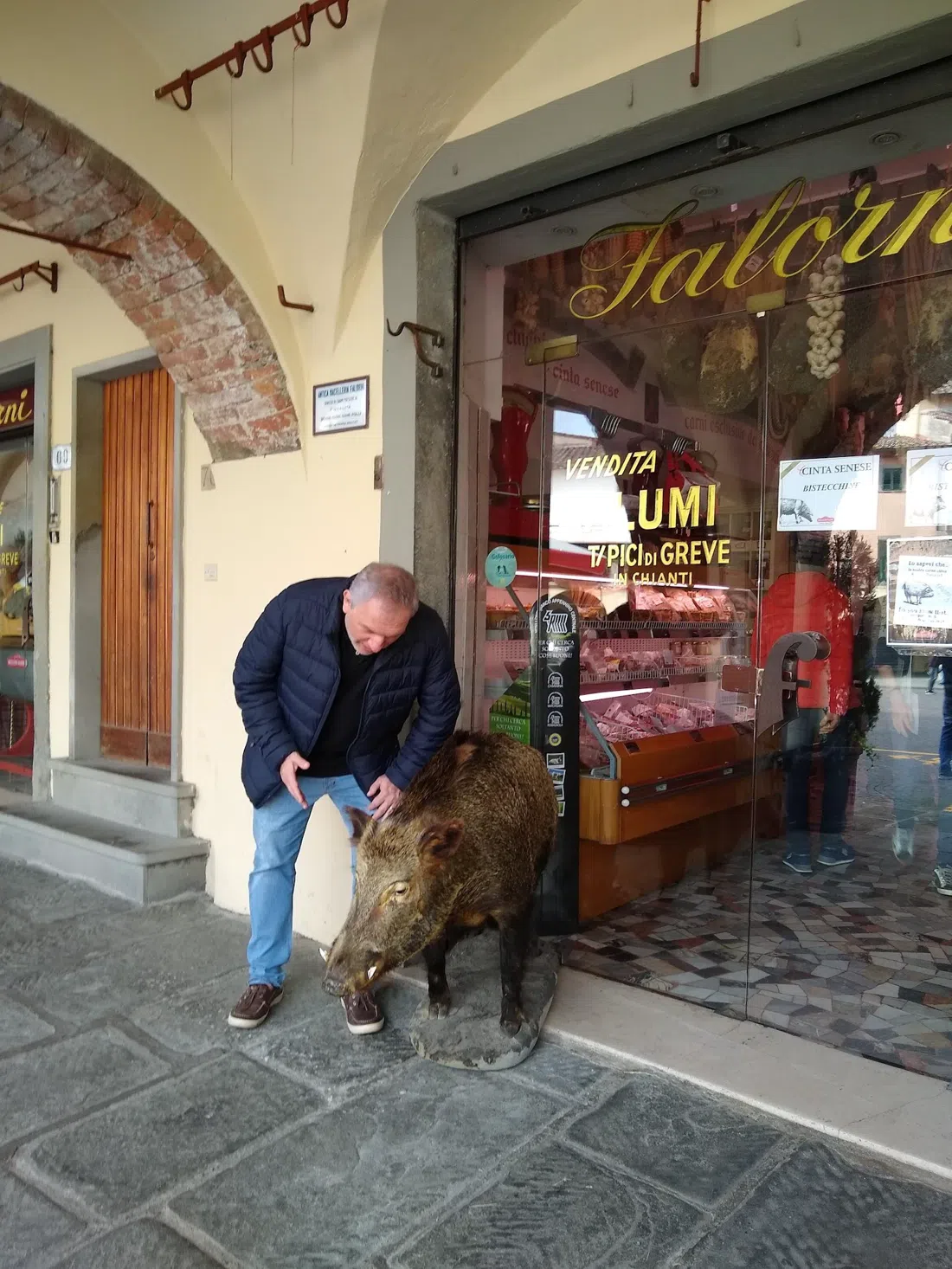
Antica Macelleria Cecchini (Chianti ridge village, between Greve and Radda) is a butcher's shop that became globally famous through a Chef's Table episode, and the two halves of it work completely differently. The shop takes walk-ins (Monday to Thursday 09:00 to 14:00, Friday and Saturday 09:00 to 18:00, Sunday 09:00 to 14:00) and the counter tasting is free, so it is a five-minute stop that costs nothing and usually produces the best photograph of the day. The eateries are another matter: single seatings at fixed times, with Officina della Bistecca doing aperitivo at 12:00 and service at 13:00, then 19:00 and 20:00 in the evening. Fixed menus start around €50. Because of that fame and those single sittings, a group needs to book well ahead. This is not a place you improvise at 12:55.
An hour in Greve spent properly
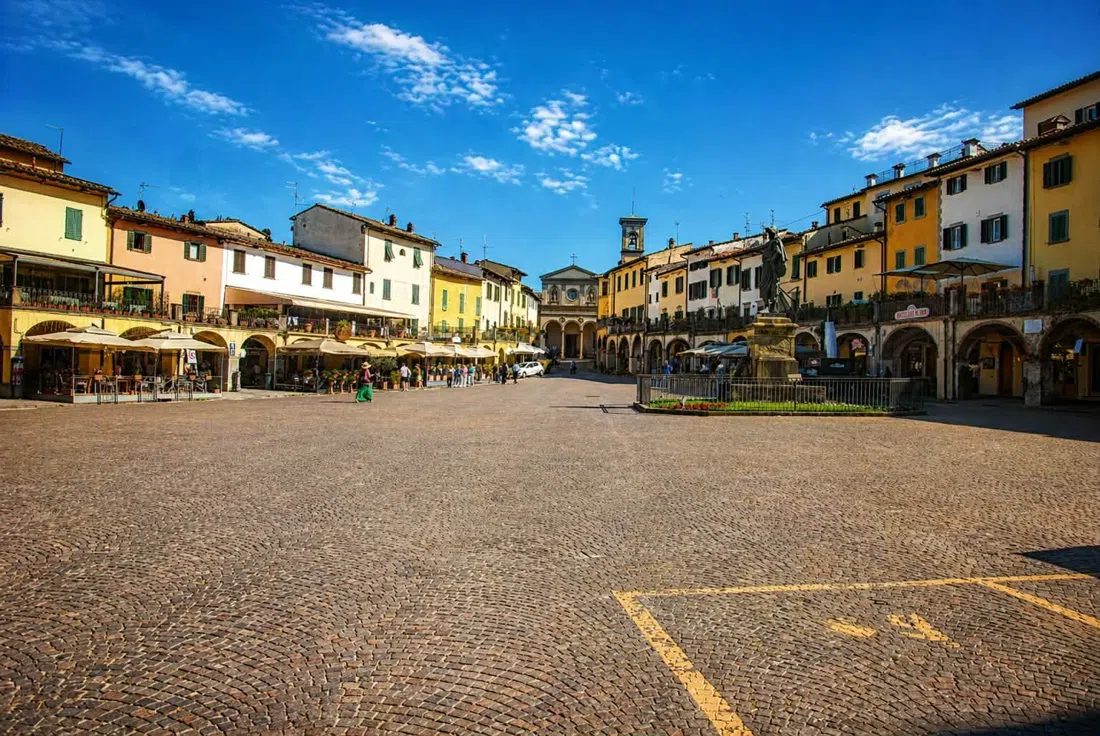
Almost every itinerary parks in Piazza Matteotti (Greve in Chianti), and that hour is free time rather than dead time. The square is public, costs nothing, and on Saturdays fills with a farmers' market of produce, cheese and flower stalls. The shops under the arcades are where the wine, salumi and ceramics actually get bought, so if you want to carry something home, buy it here rather than at an estate gate where the same bottles cost more.
Enoteca Falorni (Piazza Matteotti, Greve in Chianti) is the best-value forty minutes in Chianti and needs no reservation. It is self-service on a prepaid card, pours run roughly €1 to €7 depending on the bottle, and cheese and salumi plates cost extra. The card system means a group of eight can spread out and taste at its own pace instead of queueing at a counter, and it is the single easiest place to put Annata, Riserva and Gran Selezione next to each other without committing to a full estate visit. Pace yourself, because the card makes it very easy not to.
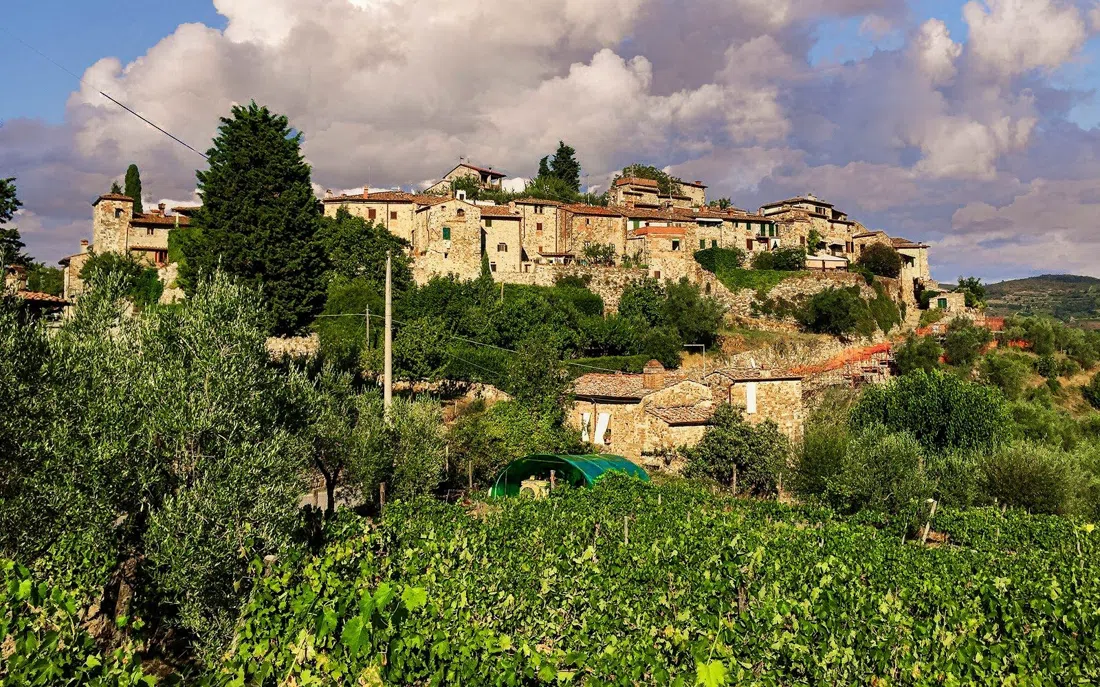
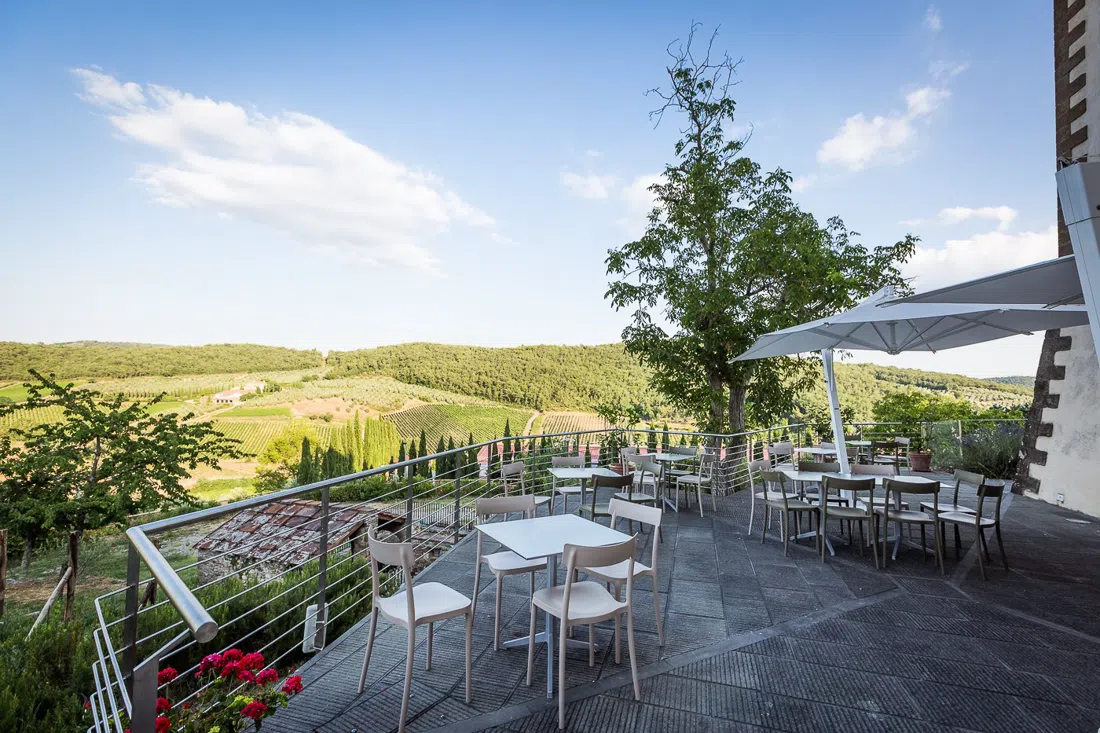
Montefioralle (five minutes above Greve in Chianti) is the stop almost everyone skips. It is a walled medieval hamlet with no ticket and no booking, reached by a steep hairpin climb on a road that only suits small vehicles and small parties, and the lanes inside are single-file narrow. What you get for that is a village that has not been rebuilt for visitors. Terrace meals at Taverna del Guerrino cost extra; walking the loop costs nothing. The late-September Montefioralle Divino wine weekend is the one time it gets genuinely busy.
Radda and Castellina when you want the whole picture
Casa Chianti Classico (Radda in Chianti) sits under the Consorzio's roof, which makes it the one neutral place in the region to learn the denomination rather than one producer's version of it. There is a wine museum, an enoteca and a bistro; it takes groups for tastings, wine and oil courses and events by phone or email; tastings run about €15 to €40 per person with the restaurant à la carte. Aperitivo service is advertised on Friday and Saturday evenings and other hours are seasonal, so confirm before making the drive up to Radda.
Via delle Volte (Castellina in Chianti) is a 15th-century covered patrol walkway built into the town's fortifications, and you can still walk its whole length for nothing, at any hour. It is narrow enough that a group has to go in twos, and the restaurant tables under the arches need booking in season. Go early morning or late afternoon, when the light comes sideways through the arches and the day-trip traffic has cleared out.
When a full day in the hills is not possible
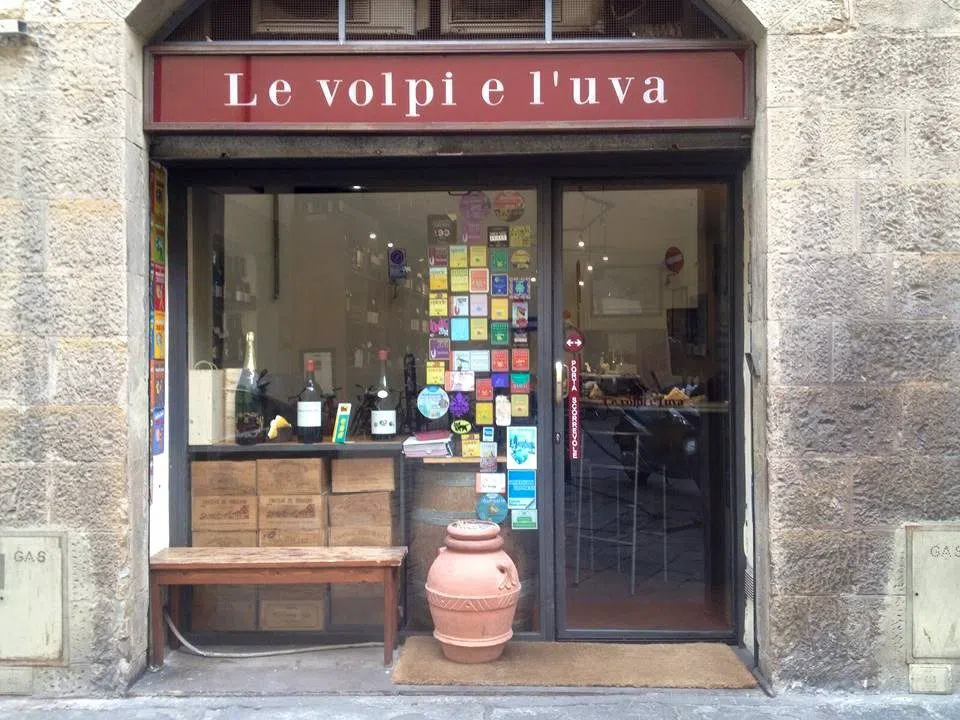
If your only free day is spoken for, the city does a decent substitute. Le Volpi e l'Uva (a two-minute walk from the Ponte Vecchio) pours a serious by-the-glass list of small producers at roughly €6 to €12 a glass, with cheese and salumi boards on top, Monday to Saturday 11:00 to 21:00. The room is genuinely small: four to six people is the practical limit, and larger parties should phone first.
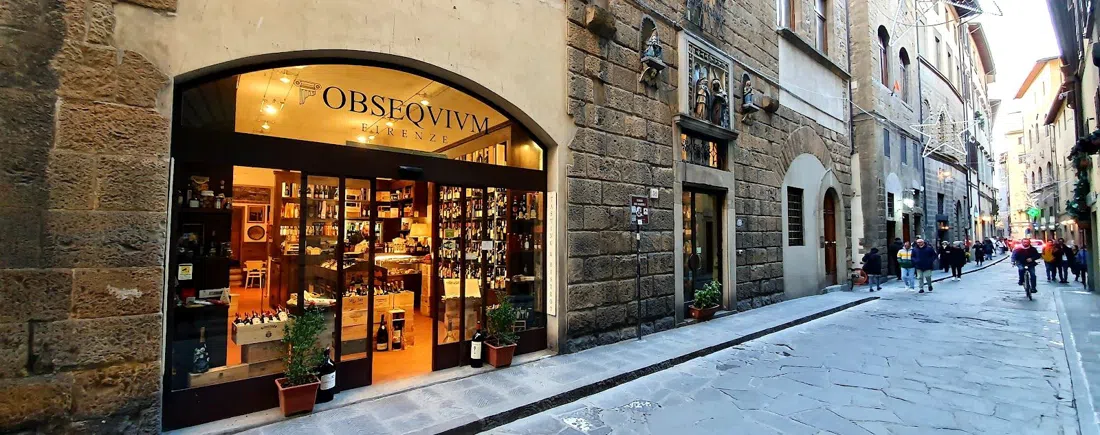
Enoteca Obsequium (central Florence) is the structured, sit-down alternative, with sommelier-led tastings booked and paid online then redeemed on arrival, Monday to Friday 11:00 to 20:00 and weekends 15:00 to 20:00, at about €25 to €60 per person for a guided flight. There is also a four-oil Tuscan extra virgin tasting, which is cheaper and more interesting than it sounds. Both suit an arrival evening or a departure morning; neither replaces standing in a vineyard. If you are still putting the trip together, the Florence guide covers what else fits around a hills day, and the Florence hotel search is the place to line up a base south of the river, close to both of these rooms.
Who gets through the door and who does not
Chianti has two tiers of access. Walk-in and free: Piazza Matteotti, Montefioralle, Via delle Volte, the Brolio grounds ticket, the Falorni card and the Cecchini shop counter. Everything else wants a reservation, and two places will refuse you outright without one. Antinori states that entry is not guaranteed, and Vicchiomaggio and Ama are reservation-only by rule.
Group size decides the rest. Couples and pairs can go anywhere, including Ama's seven-guest cap and the small room at Le Volpi e l'Uva. Parties of four to eight are the sweet spot for the whole region: Verrazzano's shared departures absorb you, and Montemaggio and Obsequium are built for exactly that number. Above fifteen the picture changes. Vignamaggio requires you to come through its groups address, Ama is impossible, Montefioralle's approach road rules out a coach, and Cecchini's single sittings must be booked long in advance. Access is worth flagging too: Verrazzano's historic cellar means stairs, Montefioralle's lanes are narrow and steep, and Via delle Volte is uneven underfoot. Non-drinkers have plenty to do here, since Brolio's gardens, the Antinori building and Obsequium's olive oil flight all stand on their own.
Is it worth it
Yes, with one condition: the small-group format is what you are paying for, not the wine. Drive yourself and a day of two estate tastings plus lunch lands in the same money, minus a driver and plus the problem of tasting wine before getting back behind the wheel on hairpin roads. Take the small-vehicle option and you get the back tracks, three cellars instead of one, and someone else doing the reversing. It suits couples, groups of friends and anyone who wants the region explained rather than narrated. It does not suit people who only want one long lunch. Book a single estate with a lunch format for that and keep the afternoon free.
Best time to go
September and early October are the best weeks of the year in these hills: harvest is running, the cellars smell of fermentation, the light is long, and Montefioralle Divino lands in late September. Spring, April into June, is quieter, greener and cooler, with all the estates on their long-season hours. Midsummer works but plan around the heat: the estates that open at 10:00 are best taken first thing, and Brolio's gardens run to 19:00 between 20 March and 12 October, which makes late afternoon a genuine option. Winter demands checking, because Brolio drops to Thursday-to-Sunday from November, Antinori shortens its weekday hours, and Casa Chianti Classico's hours go seasonal.
By day of the week, go Tuesday to Friday if you can. Ama closes on Sunday, Vicchiomaggio and the Cecchini shop run shorter Sunday hours, and Saturday brings the Greve market, charming if you want it and congested if you do not. Best time of day is early. Be at the first estate for opening, take the middle of the day for lunch and Greve, and keep the golden hour for Montefioralle or Via delle Volte.
Money, wheels and timing
Allow seven to nine hours for a proper day out of Florence, including forty-five to ninety minutes of driving each way depending on how far south you go. Public transport does not do this journey usefully: buses reach Greve but not the estates above it, and the unpaved approach roads are the whole point. A hire car works if one person stays sober; otherwise take the guided small-group option, which runs seven days a week.
Budget, doing it independently: €30 at Verrazzano or Montemaggio, €25 to €60 at Vicchiomaggio, €45 upward at Antinori, €55 for the Brolio Classic Tour or €12 for the gardens alone, €90 and up at Ama, and €10 to €20 for a decent grazing session at Falorni. Two estate visits, lunch and a glass in Greve puts most people between €90 and €140 a head before the bottles they carry home. Cards are accepted everywhere that takes bookings, but keep €20 to €40 in cash for the market stalls in Piazza Matteotti, small village bars and the odd terrace. Reserve every estate visit before you leave the city, arrive a few minutes early for the ones with fixed departures, and never plan more than three stops. The fourth is always the one you remember least.